
IPTV Sub Reseller Management explained: credit allocation, permissions, support chains and the mistakes that quietly drain margin in 2026.
IPTV Sub Reseller Management is the ongoing work of allocating credits, setting permissions and supervising the sub-accounts under a IPTV reseller panel so that customer service, billing and content access stay under control as the structure grows. It matters because a sub-reseller layer that isn’t actively managed tends to drift, credits get spent faster than expected, support requests land in the wrong place, and nobody notices until a customer is affected or a balance runs dry mid-month.
What IPTV Sub Reseller Management Actually Involves
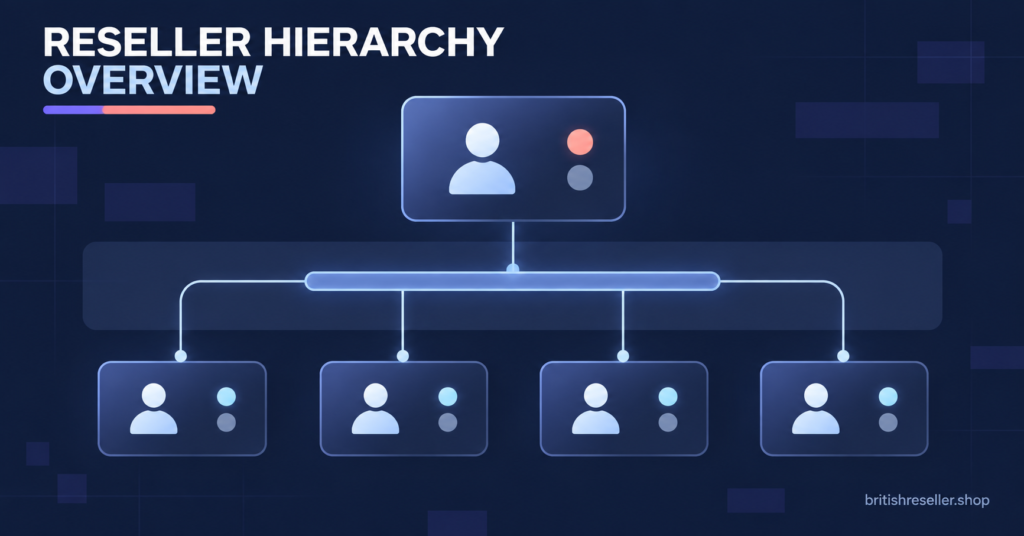
A sub-reseller is simply another account sitting underneath your own reseller account, usually given a block of credits to sell on to their own customers. The parent account keeps the master relationship with the IPTV Reseller panel provider, while the sub-reseller runs their own small operation using permissions the parent has granted them.
Management, in practice, is three ongoing jobs rather than one setup task. The first is credit control: deciding how many credits a sub-reseller holds, topping them up, and watching for unusual consumption. The second is permission control: limiting what a sub-account can actually do inside the dashboard, from creating trial lines to editing existing customers. The third is support and accountability: knowing who a customer’s problem should go to when something breaks, and making sure that path doesn’t dead-end at a sub-reseller who has gone quiet.
None of this needs to be complicated for two or three sub-accounts. It becomes a genuine operational risk once a structure grows past that, because informal tracking in a notebook or a chat thread stops matching reality.
Setting Up Permissions Before You Add Anyone
The permission structure should exist before the first sub-reseller account does, not after problems appear. Most panels that support sub-reselling let the parent account restrict things like credit transfer limits, the ability to create further sub-accounts, and access to categories or bouquets that shouldn’t be resold at all.
Decide early whether a sub-reseller can see full account details for the customers they create, or only a limited view. Some parent accounts prefer to keep customer contact information private so that a departing sub-reseller cannot simply take the customer list elsewhere. This is worth deciding deliberately rather than accepting whatever the panel defaults to.
Pro tip: Write the agreed permission set down somewhere outside the panel, even a simple shared document, so a dashboard change doesn’t quietly alter what was originally agreed.
Where Sub Reseller Structures Usually Break Down
The most common failure isn’t fraud or bad faith. It’s drift. A sub-reseller who started with clear instructions gradually stops following the pricing guidance, starts creating longer trial periods than agreed, or lets their credit balance run close to zero without warning anyone. By the time it surfaces, a customer has already been affected.
| Bottleneck | Likely cause | Practical fix |
|---|---|---|
| Credits run out mid-cycle | No low-balance alert or check-in schedule | Set a recurring balance check and a minimum top-up threshold |
| Customer complaints reach the parent account directly | No clear escalation path was agreed | Publish a short support flow stating which issues go to the sub-reseller first |
| Pricing inconsistency across sub-resellers | No shared pricing floor was set | Agree a minimum retail price in writing before granting access |
| Sub-reseller creates unauthorised further sub-accounts | Permission wasn’t restricted at setup | Disable further sub-account creation unless explicitly needed |
Building a Support Chain That Doesn’t Collapse Under You
Every sub-reseller relationship needs an answer to one question before it starts: when a customer’s stream stops working, who do they contact first? If the answer is “whoever they can reach,” the structure will eventually funnel every problem back to the parent account, regardless of who actually caused it.
A workable chain usually looks like this. The sub-reseller handles first-line customer contact, since they hold the direct relationship. If the issue is genuinely on the panel or supplier side rather than something the sub-reseller can fix, it escalates to the parent account with enough detail to act on: account identifier, symptom, and when it started. Vague escalations without that detail waste time on both sides.
Documenting this doesn’t need to be elaborate. A single page covering who to contact, what information to include, and realistic response times is usually enough to stop confusion becoming a daily occurrence.
Protecting Margin and Credit Exposure Across Levels
Each sub-reseller layer adds a small amount of margin compression, since credits are typically sold to sub-resellers at a rate between the parent’s cost and full retail. This is normal and expected, but it only works if the parent account can actually see how credits are being used further down the chain.
Regular reconciliation matters more than most people expect when they first set up a sub-reseller structure. Comparing credits allocated against customer lines actually created, on even a monthly basis, catches discrepancies before they become a pattern. A sub-reseller who consistently uses fewer credits than allocated might be selling through another channel entirely, which is worth understanding rather than ignoring.

Pro tip: Keep a simple running log of credits issued to each sub-reseller and the date, so any dispute over “how many credits were sent” has a clear answer rather than relying on memory.
Signs a Sub-Reseller Structure Needs Tightening
A few patterns tend to show up before a sub-reseller relationship becomes a genuine problem. Response times to their own customers slow down noticeably. Requests for extra credits become more frequent without a matching increase in reported sales. Support questions that should have been resolved at the sub-reseller level start arriving at the parent account instead.
None of these individually prove a problem, but together they usually mean the permission set or the check-in schedule needs revisiting rather than waiting for something more serious to force the conversation.
Good signs worth recognising too
A sub-reseller who reports low balances before they hit zero, keeps their own basic records, and routes only genuinely escalated issues upward is doing the job the structure is meant to support. Recognising that difference matters just as much as spotting the warning signs, since not every sub-reseller relationship needs the same level of oversight.
Frequently Asked Questions
How many sub-resellers can one parent account manage?
This depends entirely on the panel’s technical limits and how much manual oversight the parent account can realistically provide. There’s no universal number; the practical ceiling is usually set by how much reconciliation and support work one person can keep on top of.
Can a sub-reseller see the parent account’s other customers?
Properly configured permissions should prevent this. If a sub-reseller can see accounts they didn’t create, the permission structure needs correcting before continuing.
What happens to customers if a sub-reseller stops operating?
This depends on what was agreed at setup. Some parent accounts retain the ability to take over customer lines directly if a sub-reseller becomes unresponsive; others do not have that visibility, which is a strong argument for deciding this in advance rather than during a crisis.
Should every sub-reseller get the same permissions?
Not necessarily. A newly onboarded sub-reseller with no track record is a reasonable candidate for tighter limits than one who has operated reliably for months.
Sub-Reseller Management Checklist
- Confirm what permissions each sub-reseller account actually has before granting access
- Agree a minimum retail price and any content restrictions in writing
- Set a recurring schedule to check credit balances rather than waiting for a request
- Define the support escalation path and what information must accompany an escalation
- Reconcile credits allocated against lines created on a regular basis
- Review permission levels periodically rather than leaving them fixed indefinitely
IPTV Sub Reseller panel Management works best when it’s treated as an ongoing operational habit rather than a one-off setup step. The permissions, the credit checks and the support chain all need revisiting as a structure grows, because what suited two sub-resellers rarely still fits ten without adjustment. Start with clear written terms, check balances and account activity on a fixed schedule, and treat any drift from that as a signal to tighten the structure before it becomes a customer-facing problem.