
An effective IPTV Customer Retention UK Strategy depends far more on renewal timing, support response speed and pricing clarity than on discounting your way out of churn. Acquiring a new customer costs a reseller real money in ad spend, referral incentives and time spent on setup calls. Losing that same customer after two or three months erases most of the margin the sale ever produced. The IPTV panel resellers who keep subscribers paying month after month tend to share a small set of habits: they chase renewals before the deadline rather than after, they answer support messages quickly, and they are honest about what the service can and cannot promise.
Why Retention Matters More Than Most Resellers Assume
A £12 monthly sale against a £1.50 credit cost produces roughly £10.50 in gross margin before fees, refunds and support time are deducted. That figure looks healthy until you account for how much it cost to win the customer in the first place. If acquisition (adverts, referral fees, the hours spent talking someone through a first setup) eats several months of margin, then a customer who cancels after one or two renewals may have generated almost no real profit at all. Retention is not a soft metric sitting alongside sales figures. For a small reseller operation it is often the difference between a business that grows and one that treads water while constantly replacing lost customers with new ones.
The maths gets worse quietly. A reseller losing 15 out of every 100 customers each month needs a steady stream of new sign-ups just to stand still, long before any real growth appears in the numbers. Fixing the leak is usually cheaper than filling it faster.
Where Customers Actually Drop Off
Churn rarely happens for one single dramatic reason. It tends to build from a handful of smaller frictions stacking up over a few weeks.
| Drop-off point | What is usually happening |
|---|---|
| First 48 hours | Setup confusion, wrong app recommended for the device, credentials copied incorrectly |
| Around week two | A stream buffers on a specific ISP or network and support responds slowly |
| Renewal date | Customer forgets, card fails, or price feels unclear against what they remember paying |
| One to three months in | Nothing has gone wrong, but no one has followed up, so switching to a competitor feels risk-free |
Notice that only one of these rows involves something breaking. The rest are process gaps: nobody reminded the customer, nobody checked whether the setup actually worked, nobody explained why the price was what it was. Those are fixable without touching the underlying panel or supplier at all.
Fixing the First 48 Hours
New customers who struggle with setup rarely complain. They just quietly stop replying and don’t renew. A short setup message sent at the point of sale, matched to the customer’s actual device rather than a generic instruction sheet, removes a large share of early dropout before it happens. Comparing common player formats for different devices helps you recommend the right app instead of a default one that may not suit an older smart TV or box.
Pro tip: Send a follow-up message 24 hours after activation asking specifically whether the app opened and channels loaded, rather than a generic “let us know if there are issues” line that most customers ignore.
Confirming the connection details format matters here too. Whether a customer has been given a username and password, an M3U link, or portal details for a MAG-style device, getting that string exactly right the first time avoids a support ticket before it starts.
Renewal Timing Is the Single Biggest Lever
Most churn that looks like dissatisfaction is actually forgetfulness. A customer who was happy with the service in month one can still fail to renew in month two simply because no reminder reached them before the subscription lapsed, and by the time they notice, they’ve already looked elsewhere. Reaching out three to five days before expiry, rather than after the line has already gone dark, changes the outcome of a large share of renewals.
This is where a clear grip on your own credit position matters. If you’re managing renewals across a growing customer base, understanding how reseller credits are consumed per subscription term lets you forecast which customers are due and flag them automatically rather than reacting to cancellations after the fact.
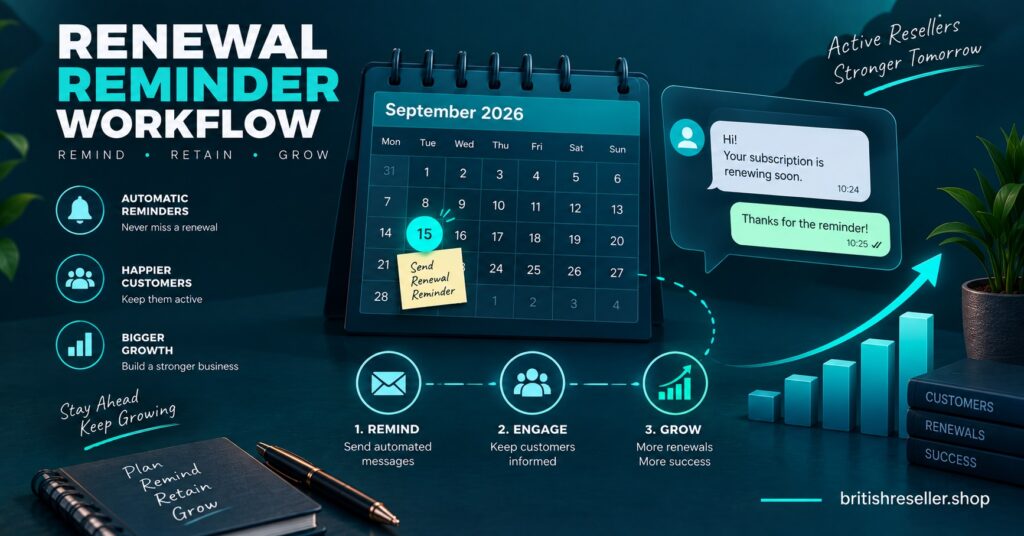
Pro tip: Keep a simple spreadsheet or panel-based list sorted by expiry date. A five-minute check each morning catches renewals days before a customer would otherwise lapse.
Support Speed Changes the Retention Conversation Entirely
A customer who reports a buffering stream and hears nothing back for six hours has effectively been given a reason to cancel. The same customer, answered within twenty minutes even with an honest “we’re checking this now” message, usually stays. Speed matters more than the sophistication of the answer in the first instance.
This is also where honesty pays off over time. No IPTV panel reseller can promise that every stream will work perfectly on every ISP, every device, every evening. Customers who are told this plainly upfront, and given a sensible explanation when something does go wrong, tend to be more forgiving than those who were sold on unrealistic “zero buffering” language and then hit reality.

Pricing Clarity Reduces Silent Cancellations
A customer who doesn’t remember what they agreed to pay, or who is surprised by a renewal price that’s different from what they recall, will often cancel rather than ask why. Confirming price and term length in writing at the point of sale, and again at renewal, removes that ambiguity. This matters more for longer subscription terms, where a twelve-month customer renewing after a year may have genuinely forgotten the original figure.
Building this into a wider approach connects directly to how you acquire customers in the first place. Planning the full customer journey from trial through to renewal tends to produce steadier retention than treating acquisition and retention as separate problems.
Using Sub-Reseller Structures Without Losing Customer Control
Resellers who scale up sometimes hand customer management to sub-resellers without a clear support standard attached. If a sub-reseller is slow to respond or inconsistent with pricing, the churn shows up under the parent account’s reputation even though the parent wasn’t directly involved. Setting clear permissions and credit controls when allocating sub-reseller accounts keeps retention standards consistent as the business grows, rather than letting quality vary by whoever happens to be handling a given customer.
Warning Signs Worth Watching For
A few patterns tend to show up before a customer actually cancels:
- A support ticket that goes unanswered for more than a few hours during peak evening viewing times
- A customer asking about the price again close to a renewal date, often a sign they’re comparing options
- Reduced app opens or connection activity in the weeks before expiry, where that data is visible
- A first-time customer who never confirms that setup worked
None of these guarantee a cancellation is coming, but together they’re a reasonable prompt to check in proactively rather than waiting for a cancellation message to arrive.
Building This Into an Ongoing Habit
None of the individual actions here are complicated. Sending a reminder, answering quickly, confirming a price, checking in after setup: these are small, repeatable tasks rather than one-off campaigns. The IPTV resellers who retain customers well tend to treat retention as a weekly operational habit rather than something addressed only when cancellations spike. A basic version of this could run entirely from a spreadsheet and a messaging app; a more established operation might build it into panel workflows or automated reminders as volume grows.
Common Questions
Does offering a discount at renewal actually reduce churn?
It can help in the moment, but discounting alone rarely fixes the underlying reason a customer was about to leave. A customer who never confirmed their setup worked, or who never received a renewal reminder, is more likely to be kept by fixing that gap than by cutting five pounds off the price.
How soon should a renewal reminder go out?
Three to five days before expiry gives most customers enough time to act without the message being forgotten. A second, shorter reminder closer to the expiry date catches anyone who missed the first one.
Is retention more important for resellers with sub-reseller accounts?
Yes, arguably more so, because a churned customer under a sub-reseller can be harder to spot quickly. Clear reporting between sub-reseller and parent account helps catch drop-off patterns before they become a habit.
Should I follow up with customers who never respond to a setup confirmation message?
A single follow-up is worth sending. Customers who go quiet in the first week are often the ones struggling silently rather than the ones who are simply satisfied and uninterested in replying.
Can retention be improved without changing panel or supplier?
In most cases, yes. The issues covered here (reminder timing, support speed, pricing clarity, setup confirmation) sit entirely within how the IPTV panel reseller operates, independent of which panel or credit supplier is behind the service.
Conclusion
A working IPTV Customer Retention UK Strategy comes down to catching the small, ordinary moments where customers quietly drift away: a confusing setup, a missed renewal reminder, a slow reply to a support message, or a price they no longer remember agreeing to. None of these require a bigger panel, a cheaper credit rate or a different supplier to fix. They require a consistent weekly habit of checking who’s due to renew, confirming new setups actually worked, and answering support messages before frustration sets in. Start by picking one gap from this list, most commonly renewal timing, and build a simple process around it before adding the rest.
Retention Checklist
- Send a setup confirmation follow-up within 24 hours of activation
- Track renewal dates and message customers three to five days before expiry
- Confirm price and term length in writing at both sale and renewal
- Respond to support messages within an hour during peak evening viewing
- Review sub-reseller support standards if credits are allocated to other sellers
- Check for reduced activity or repeated price questions as early churn signals
- Avoid unrealistic buffering or uptime promises that create disappointment later