
If you have just started an IPTV reseller business or you have been running one for a while but your customer numbers are stuck, you are not alone. Getting customers is the single biggest challenge resellers face in 2026. The product is great, the margins are solid, and the demand is clearly there. But actually reaching people and convincing them to buy from you instead of someone else? That is where most resellers get stuck.
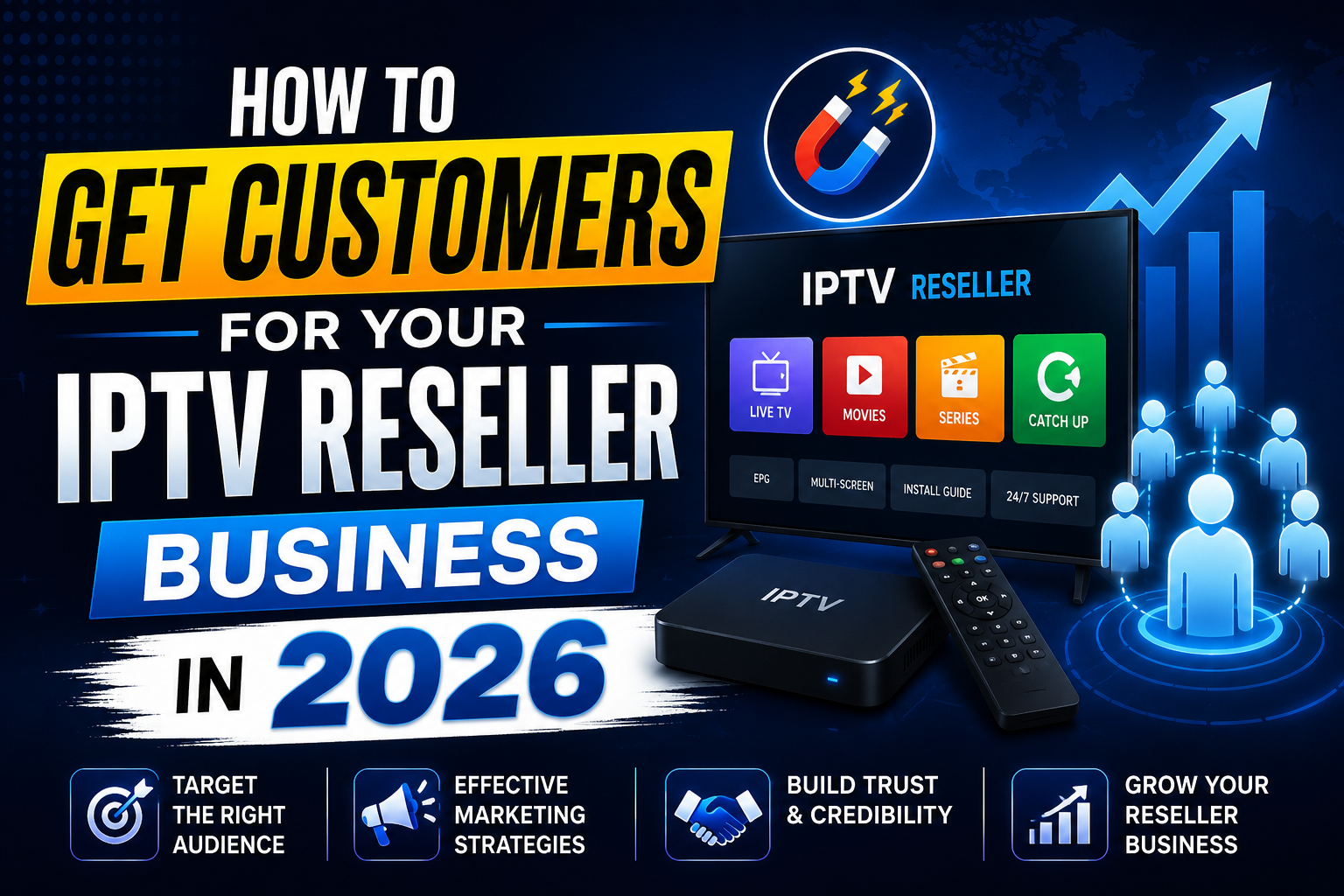
This guide (How to Get Customers for IPTV Reseller Business) breaks down how real IPTV resellers in the UK are actually finding and keeping customers right now. Not theory. Not outdated advice about running Facebook ads. What actually works in 2026 when most traditional advertising platforms have shut the door on IPTV related promotions.
Why Traditional Advertising Does Not Work for IPTV Resellers
Let us get this out of the way first because it saves you both time and money. If you are thinking about running ads on Google, Facebook, Instagram, or Reddit to promote your IPTV reseller business, do not bother. These platforms have strict policies against IPTV related advertising. You cannot even select IPTV as a targeting keyword on most of them. Your ads will either get rejected immediately or they will run for a day or two before your ad account gets flagged and shut down.
Some resellers have tried creative workarounds like advertising “streaming entertainment” or “TV subscription services” without mentioning IPTV directly. The result is almost always the same. Either the platform catches on and bans you, or the ads reach completely the wrong audience because the targeting is so vague that your money just disappears into clicks from people who have no idea what IPTV even is.
This is not a small inconvenience. It fundamentally changes how you need to think about growing your IPTV reseller business. You cannot just throw money at ads and expect customers to roll in. You need organic, relationship based strategies that build trust over time. The good news is that these strategies are free or very low cost, and they tend to bring in more loyal customers anyway.
Word of Mouth Is Still the Number One Channel
Ask any successful IPTV reseller in the UK how they got their first 20 or 30 customers and the answer is almost always the same. Word of mouth. A friend told a friend who told a colleague at work. Someone saw it working at a mate’s house and asked where they got it. A family member signed up and then told everyone at their next gathering.
This is not an accident. IPTV is the kind of product that sells itself once people see it in action. When someone visits your house and sees you flicking through hundreds of live channels, catching every League match, and watching movies that are still in cinemas, they want that too. The conversation happens naturally.
So how do you encourage more of these conversations to happen? First, make sure every single one of your existing customers has an easy way to refer people to you. That could be as simple as giving them your WhatsApp number or a link to your website and saying “send anyone my way.” But you can take it further by offering a referral incentive. Give your existing customer a free month for every new customer they bring in. Or give both the referrer and the new customer a discount. Even a small incentive like knocking five pounds off their next renewal turns your customers into active salespeople who are genuinely motivated to spread the word.
Second, make the product easy to show off. If you sell a service that has a clean interface, loads quickly, and works reliably, your customers will naturally want to show it to people. If the service is buggy, buffers constantly, or looks outdated, they will keep quiet about it or worse, they will warn people away. The quality of the service you resell directly impacts how much word of mouth you generate.
Building a Simple Website That Actually Brings In Customers
The resellers who grow beyond their immediate circle of friends and family almost always have one thing in common. They have a website. It does not need to be fancy. It does not need to cost hundreds of pounds. But it does need to exist because a website does something that no amount of WhatsApp messaging can do. It lets strangers find you.
When someone in the UK types “best IPTV subscription UK 2026” or “cheap IPTV for League” into Google, they are actively looking for what you sell. If you have a website that shows up in those search results, you are putting yourself in front of people who already want to buy. You do not need to convince them that IPTV is worth trying. They have already decided that. You just need to convince them to buy from you specifically.
Your website does not need dozens of pages. A homepage that clearly explains what you offer, a pricing page that shows your packages, a page explaining how to set up the service on different devices, and a contact page with a WhatsApp link or contact form. That is enough to start with.
The key is writing content that matches what people are searching for. Think about the questions your customers ask you most often. How do I set up IPTV on a Firestick? What channels do I get? Does it include Sports? Can I use it on more than one TV? Each of those questions is something people are typing into Google right now. Every blog post or page you create answering one of those questions is another chance for a stranger to land on your website and discover your service.
Using WhatsApp and Telegram the Right Way
WhatsApp and Telegram are where a huge amount of IPTV business happens in the UK. But there is a right way and a wrong way to use them. The wrong way is joining random groups and spamming your link everywhere. You will get banned from the groups, annoy potential customers, and damage your reputation before you even get started.
The right way is to build your own community. Create a WhatsApp broadcast list or a Telegram channel for your existing customers. Use it to send occasional updates. Let them know when new channels have been added, when there is a big sporting event coming up and the service is ready for it, or when you are running a renewal discount. Keep it useful and not too frequent. Once a week or a couple of times a month is plenty.
The value of this is twofold. It keeps your existing customers engaged so they are more likely to renew. And it gives them something to forward to friends. When you send a message saying “Champions League final tonight, all matches streaming in HD, message me if you need a subscription sorted before kickoff,” your existing customers will forward that to mates who do not have IPTV yet. That is targeted, organic marketing that costs you nothing.
Understanding Your Margins So You Can Price Competitively
Pricing is a bigger part of getting customers than most resellers realise. If you are too expensive, people will go elsewhere. If you are too cheap, people will assume the service is poor quality. You need to find the sweet spot.
There are two main types of IPTV reseller panels in the UK market and the economics are quite different for each.
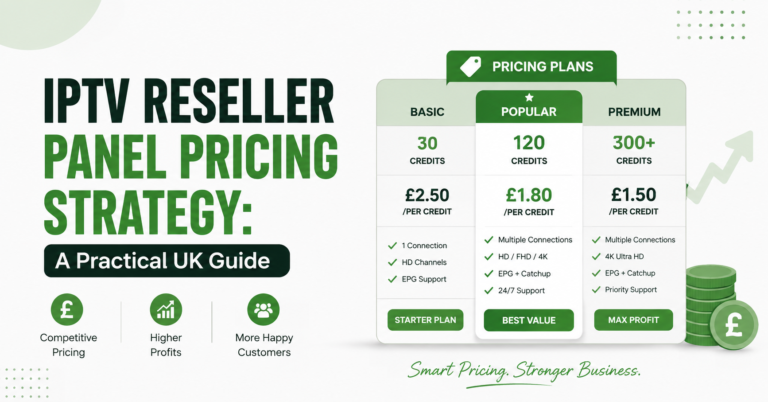
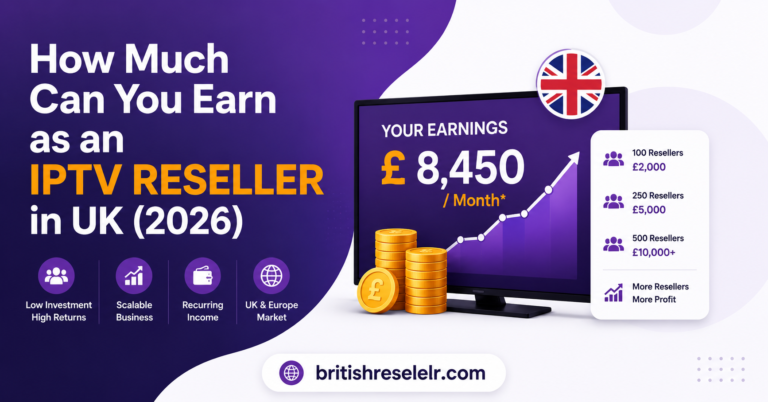
UK focused panels that carry mostly English language content in well organised categories tend to have lower credit costs, typically around 1.50 to 1.80 per credit, where one credit equals one month of subscription for one customer. If you sell a 12 month subscription, your cost is roughly 18 to 22 pounds. Most UK resellers sell that 12 month package for somewhere between 50 and 80 pounds. That gives you a very healthy margin of around 30 to 60 pounds per customer per year. This is where the real profit is in IPTV reselling.
EU based reseller panels that include content in multiple European languages are a different story. These panels are more expensive to buy into, with credits costing around three pounds each. A 12 month subscription costs you around 36 pounds. These services typically sell for 80 pounds at the lower end and can go close to 100 pounds. While the selling price is higher, the margins are actually tighter because your credit costs are nearly double what they are on UK panels. EU panels have their place, especially if you are targeting non English speaking communities in the UK, but for most resellers the UK focused panels offer better profitability.
The point is that you have room to play with your pricing, especially on UK panels. Offering a one month trial at a lower price point, say five or six pounds, is a great way to get new customers through the door. Once they see the quality and realise it works reliably, converting them to a 12 month subscription becomes much easier. That first month might only make you three or four pounds profit, but the annual subscription that follows makes it very worthwhile.
Turning One Time Buyers Into Long Term Subscribers
Getting a customer is only half the battle. Keeping them is what actually builds your business. A reseller with 100 customers who all renew every year is in a far better position than a reseller who signs up 200 customers a year but loses 180 of them.
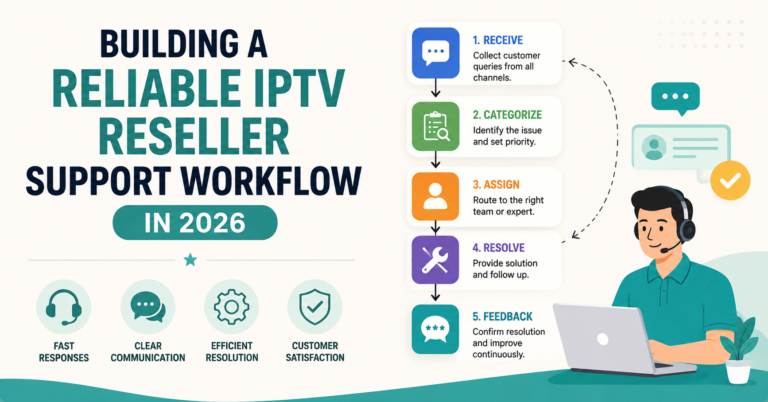
The biggest reason customers leave is not price. It is poor support. When their service goes down during a football match, when a channel stops working, when they get a new TV and do not know how to set it up, they need help. If you respond quickly and sort the problem out, they stay. If you ignore their messages or take days to reply, they find another reseller who actually answers.
Set up a system for handling customer issues. It can be as simple as a dedicated WhatsApp number that you check regularly. Let your customers know that if they ever have a problem, they can message you and you will get back to them within a few hours. Then actually follow through on that promise.
Another powerful retention tool is giving your long term customers a loyalty discount. When someone’s 12 month subscription is about to expire, send them a message offering a renewal at a slightly lower price than they originally paid. This makes them feel valued, removes the temptation to shop around, and locks in another year of revenue for you.
Asking for Reviews and Testimonials
Social proof matters enormously in IPTV because customers are essentially trusting you with their money before they can see the product. They cannot browse a shop shelf. They cannot try before they buy unless you offer a trial. So they rely heavily on what other people say.
After a customer has been with you for a month or two, ask them for a short review. It can be a WhatsApp message, a quick text, or even a screenshot of them saying something positive about the service. Put these testimonials on your website. Share them on your Telegram channel. When a potential customer is on the fence, being able to show them five or ten real reviews from happy UK customers can be the thing that tips them over the edge.
Do not fake reviews. People can tell, and in a business built on trust and word of mouth, getting caught faking testimonials will destroy your reputation far faster than having no reviews at all.
Thinking Long Term About Your IPTV Reseller Business
The resellers who are still thriving in 2026 are the ones who treated this as a real business from the start. They built a website. They looked after their customers. They created simple systems for referrals and renewals. They did not chase shortcuts or waste money on advertising platforms that were never going to work for IPTV.
If you are just starting out, focus on your first 10 customers. Get them through word of mouth. Provide them with excellent service and fast support. Ask them to refer their friends. Build a simple website so that strangers can find you too. Price your service competitively but do not race to the bottom. And remember that every happy customer is a potential source of two or three more.
Growing an IPTV reseller business takes patience. But the demand in the UK is not going anywhere. People want affordable access to live sport, entertainment, and international channels. If you position yourself as a reliable, responsive, and trustworthy reseller, the customers will come. It just takes the right approach and a willingness to put in the work.
Frequently Asked Questions
How to Get Customers for IPTV Reseller Business?
The most effective method in 2026 is word of mouth and personal referrals. Most advertising platforms like Google, Facebook, and Reddit do not allow IPTV related promotions, so resellers rely on personal networks, customer referrals, WhatsApp and Telegram communities, and building a website that ranks in Google search results for IPTV related searches.
Can you run ads for an IPTV reseller business?
No. Major advertising platforms including Google Ads, Meta (Facebook and Instagram), and Reddit have policies that prevent IPTV related advertising. Attempting to run ads for IPTV services usually results in the ad being rejected or the ad account being banned. Organic growth strategies like SEO, word of mouth, and referral programmes are far more effective and cost nothing.
How much profit do IPTV resellers make per customer?
For UK focused IPTV Reseller panels, resellers typically buy credits at around 1.50 to 1.80 per month per customer and sell 12 month subscriptions for between 50 and 80 pounds. This gives a profit margin of roughly 30 to 60 pounds per customer per year. EU based panels have higher credit costs at around three pounds per credit and sell for 80 to 100 pounds, but the margins are tighter despite the higher selling price. UK panels are generally more profitable for most resellers.
What is the best way to keep IPTV customers from leaving?
Fast and reliable customer support is the single biggest factor in retention. Responding quickly when customers have issues, sending renewal reminders with loyalty discounts, and keeping customers informed about new channels or service updates through WhatsApp or Telegram all help reduce cancellations significantly.
Do I need a website to sell IPTV subscriptions?
You do not strictly need one, but resellers who have a website consistently grow faster than those who do not. A website lets potential customers find you through Google searches, gives you a professional presence that builds trust, and provides a place to publish setup guides and FAQs that attract new visitors organically