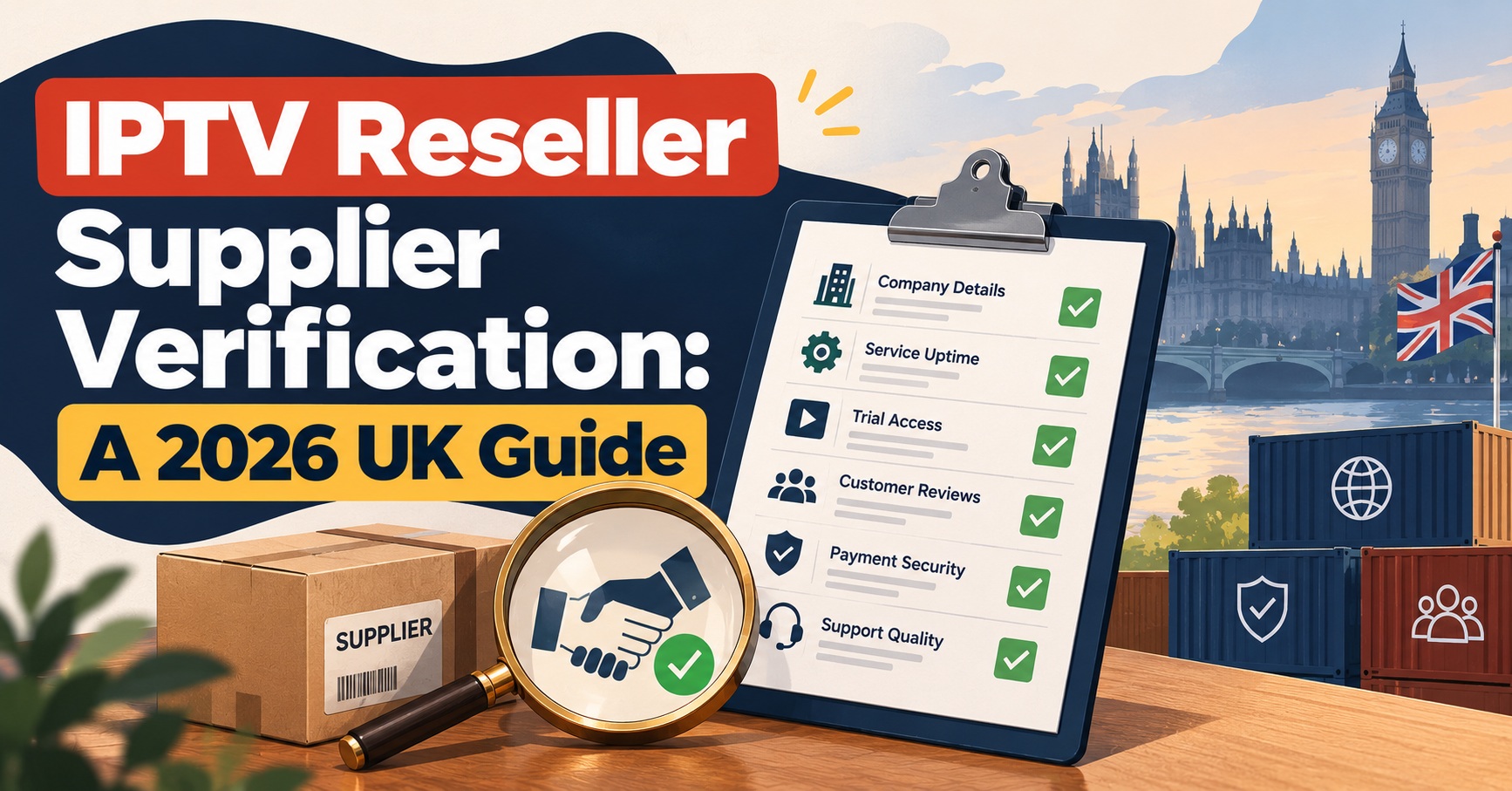

IPTV Reseller Supplier Verification comes down to four checks you can complete before any money moves. First, who the supplier legally is. Second, what written evidence they hold for the right to distribute what they sell. Third, how their payment and refund terms work. Fourth, who you can actually reach when something breaks. If a supplier cannot give clear answers on all four, the panel features and the credit price stop being the deciding factors.
None of these checks proves a supplier is safe. They show whether a supplier is willing to be accountable, and that is the more useful thing to know. A properly registered company with a verified director can still sell services it has no right to sell. A polished reseller dashboard says nothing about licensing either way. Treat each answer as evidence to weigh, and keep copies of everything. The file you build now is what you will rely on if a dispute, a chargeback or a legal question arrives six months later.
Start With the Paper Trail, Not the Panel
Most resellers judge a supplier by logging into a demo panel and seeing how it feels. That tells you about the software and very little about the business behind it. The first job is to find out whether there is a real, identifiable legal entity on the other side of the transaction.
For a UK supplier, the Companies House register is free to search. It shows a company’s status, registered office, directors’ names and service addresses, and its filing history. You are looking for consistency. The company name on the register should match the name on the supplier’s website, its terms and its invoices. The company should be active, not dissolved or in the process of being struck off. A long run of overdue accounts or confirmation statements is worth a question.
Director identity has also become easier to check. Companies House made identity verification for directors a legal requirement from 18 November 2025, with a transition period for existing directors that closes on 17 November 2026. Once that period ends, a UK supplier whose directors have not verified their identity is showing you something about how it treats its legal obligations.
Keep in mind that Companies House largely records what companies submit to it. A clean record is a starting point, not an endorsement.
Suppliers based outside the UK should be able to name the business registry where they are incorporated and give you a registration number you can check yourself. Be cautious with a supplier that offers only a trading name, a messaging handle and a payment link. You are not necessarily dealing with fraud, but you have nobody to hold responsible if things go wrong.
Two smaller checks round this off. Search the supplier’s name alongside words such as “complaints” or “scam”. Action Fraud recommends this as part of knowing your suppliers, and it takes two minutes. Then compare the contact details. The email domain, the website and the company name should all point to the same organisation.
The Rights Question Most Suppliers Dodge
This is the check that separates a legitimate IPTV business from one that is simply well run. IPTV is a delivery technology. Whether a service is lawful depends on whether the content it carries is distributed with the rights holders’ permission. The UK Intellectual Property Office treats watching content without the copyright owner’s permission, by any means, as illicit streaming. The government’s response on illicit IPTV streaming devices sets out how seriously this area is treated.
So ask directly, in writing: what rights does the supplier hold, from whom, for which territories, and for how long? A credible answer usually comes with documentation. That might be a distribution agreement, a letter of authorisation from an upstream licensed provider, or a redacted contract showing the parties, the territory and the term. Commercial details can reasonably be blacked out. The existence of the agreement and its scope should not be.
Answers that should worry you tend to sound similar. “All our content is licensed” with nothing attached. “We are just a technology provider” while the sales page advertises named programming. “Our lawyers handle that” with no lawyer’s name. Each of these shifts the risk onto you, the IPTV panel reseller, because you are the one selling to the public.
It also helps to understand where the supplier sits in the chain. Some panels are operated by the rights-holding service itself. Others sit two or three layers down a wholesale chain. If you are unclear on how that layering works, our explainer on how IPTV reseller panels work covers the account and credit structure. A supplier who cannot explain its own position in that chain probably cannot evidence its rights either.

IPTV Reseller Supplier Verification as a Scoring Exercise
Running the checks is easier when you record the answers side by side rather than relying on an overall impression. The example below is hypothetical, built to show the method rather than to describe any real company. Two suppliers approach a UK reseller who plans to buy an initial block of IPTV credits.
| Check | Supplier A | Supplier B |
|---|---|---|
| Legal entity matches invoice | UK limited company; register name matches website and invoice | Trading name only; invoice issued by an individual |
| Directors and filings | Two directors listed, filings up to date | No registered entity to look up |
| Written rights evidence | Redacted authorisation naming territory and term | “Everything is licensed” in chat, no document |
| Refund terms for unused credits | Written policy in published terms | Not stated; “no refunds” said informally |
| Escalation route | Named support lead, ticket system, response window in terms | One messaging handle, no hours given |
Supplier B might offer cheaper credits and a faster panel, and neither changes the outcome here. On every row Supplier B leaves the reseller carrying the risk. There is no entity to claim against, no evidence to show a customer or an adviser, and no route to escalate a fault.
Supplier A is not automatically safe either. The rights document still needs reading properly, including the territory and the end date. You should test the escalation route yourself before trusting it. But Supplier A has given you material to verify. Supplier B has asked you to take its word.
A simple scoring rule works well. Any blank on the rights row is a stop, regardless of the other scores. Blanks elsewhere are questions to resolve in writing before you pay. If you are weighing several suppliers at once, our comparison of IPTV reseller panel options in the UK is useful alongside this table. Use it for feature comparison only once a supplier has passed the checks above.
Payment Terms Tell You How a Supplier Thinks About Risk
Payment terms are where a supplier’s attitude to accountability becomes concrete. Read them before you buy, not after the first problem.
Start with the invoice. It should name the same legal entity you checked on the register. If the supplier says it is VAT-registered, the VAT number should appear, and HMRC provides an online service for checking UK VAT numbers. An invoice from a different name, or no invoice at all, leaves you with weak records for your own accounts.
Next, look at what happens to unused credits. Can they be refunded if the service is withdrawn? Do they expire? What happens if the supplier suspends your account? These questions matter more than headline pricing, because credits are prepaid stock. If your panel has sub-resellers drawing from your balance, the exposure grows. Our guide to setting up sub-reseller accounts and managing credits explains how that balance flows downward.
Payment method matters too. A supplier that accepts only irreversible transfers, or pushes you towards methods with no buyer protection, has removed one of your few remedies. That alone does not condemn them. It does mean the other checks need to be stronger.
Pro tip: Treat any request to change a supplier’s bank details as a fraud check, not an admin task. Action Fraud advises confirming changes through a phone number or contact you already hold, never the one in the message requesting the change. Make sure no single person on your team can approve such a change alone.
Escalation Contacts: Test Them Before You Need Them
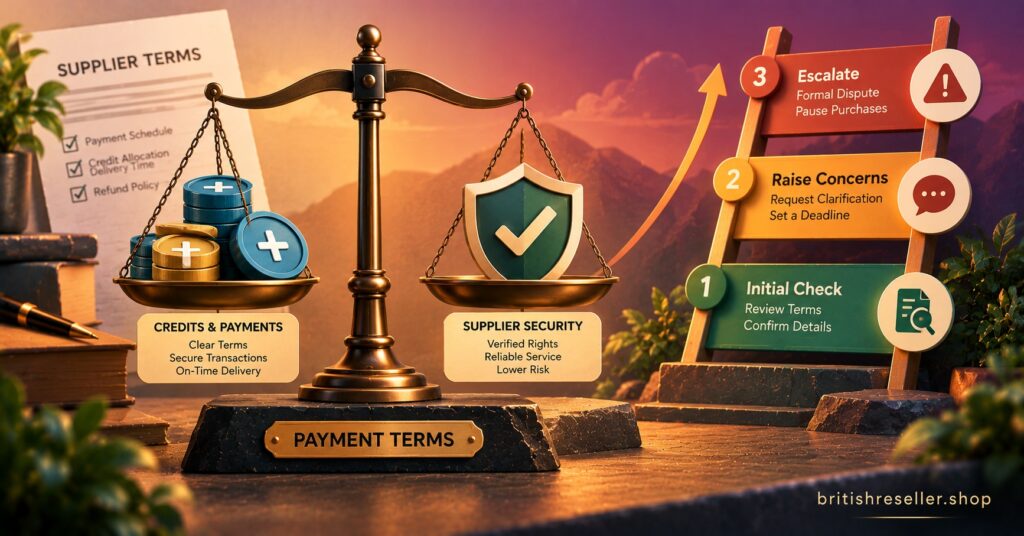
Every supplier says it offers support. Fewer can tell you what happens when first-line support cannot fix a problem. You want three things in writing: a named route for escalation, the hours it operates, and a stated response window. Ask whether the supplier has its own upstream contact for faults it cannot resolve, and how long that route typically takes.
Then test it. Before buying your main credit block, open a genuine support ticket. A setup question or a clarification on the terms is enough. Note how long the reply took, whether it actually answered the question, and whether it came from a person or a template. If you cannot get a straight answer while the supplier is still trying to win your business, expect less once you have paid.
Keep the contact details you gather in your supplier file, alongside the company record and the rights documents. If your main contact leaves or a messaging account disappears, you still have a documented route to the business itself.
Red Flags Worth Walking Away From
A few signals justify ending the conversation rather than investigating further:
- Refusal to name a legal entity, or a name that changes between the website, the terms and the invoice
- Claims of full licensing with no willingness to show any document, even redacted
- Pressure to pay quickly, such as limited-time credit bundles tied to “today only” terms
- Payment requested only through irreversible methods, or to an account in a different name
- Support available only through a single personal messaging account
- Bank details sent by email or chat with an urgent request to update them
One of these on its own might have an innocent explanation. Two or more together usually describe a supplier who has arranged things so that you carry the consequences.
Keeping the File Alive After You Sign
Verification is not a one-off gate. Rights agreements have end dates, directors resign, and companies fall behind on filings. Companies House offers a free “follow” service that emails you when a company you track files something or changes its details. It costs nothing and catches the changes you would otherwise miss.
A light quarterly review is usually enough. Confirm the company is still active, check whether the rights documentation has passed its stated term, and make sure your escalation contacts still work. If a supplier’s answers get vaguer over time, that is information too.
Frequently Asked Questions
Can I verify a supplier registered outside the UK?
Yes, though the route differs. Ask for the registry where the business is incorporated and its registration number, then check it on that registry’s official website. If a supplier cannot name a registry at all, you have nothing to verify.
Is a professional reseller dashboard evidence that a supplier is licensed?
No. The quality of the panel software tells you nothing about distribution rights. Licensing is shown through written agreements, not through features or design.
How much rights documentation is reasonable to ask for?
Enough to confirm the parties, the territory and the term. Suppliers can reasonably redact prices and commercial terms. They should not refuse to show that an agreement exists.
What should I do if I think a supplier has defrauded me?
Contact your bank or payment provider straight away, keep every invoice and message, and report it to Action Fraud if you are in the UK. Your supplier file will make that report much easier to put together.
Does a verified company director mean the business is trustworthy?
It means a real, identified person is accountable for the company, which is useful. It does not confirm content rights, financial health or service quality, so the other checks still apply.
The Supplier You Can Hold to Account
IPTV Reseller Panel Supplier Verification will not guarantee that a supplier never fails you. Services get withdrawn, upstream providers change terms, and documents can be misleading. What it gives you is a supplier you can identify, evidence you can point to, terms you can enforce and a person you can reach. That is a far stronger position than a good-looking panel and a low credit price. Start with the company register and the rights question, because those two checks remove most unsuitable suppliers before you have spent anything.
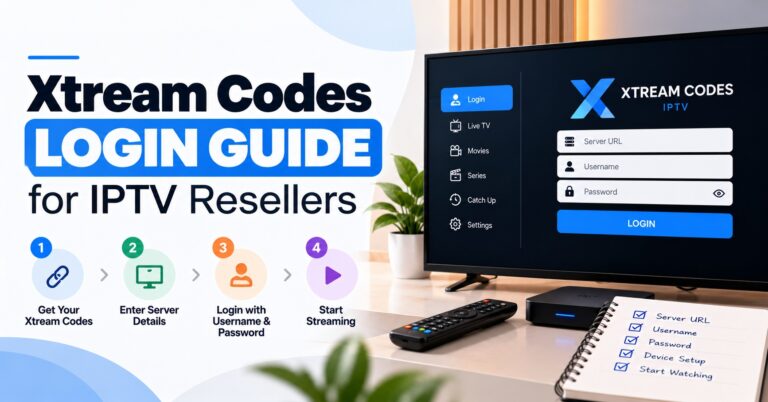


[…] to create or delete lines, and use it only for monitoring. The reasoning is the same as for any IPTV reseller panel security review: if those stored credentials leak, the damage should be close to […]