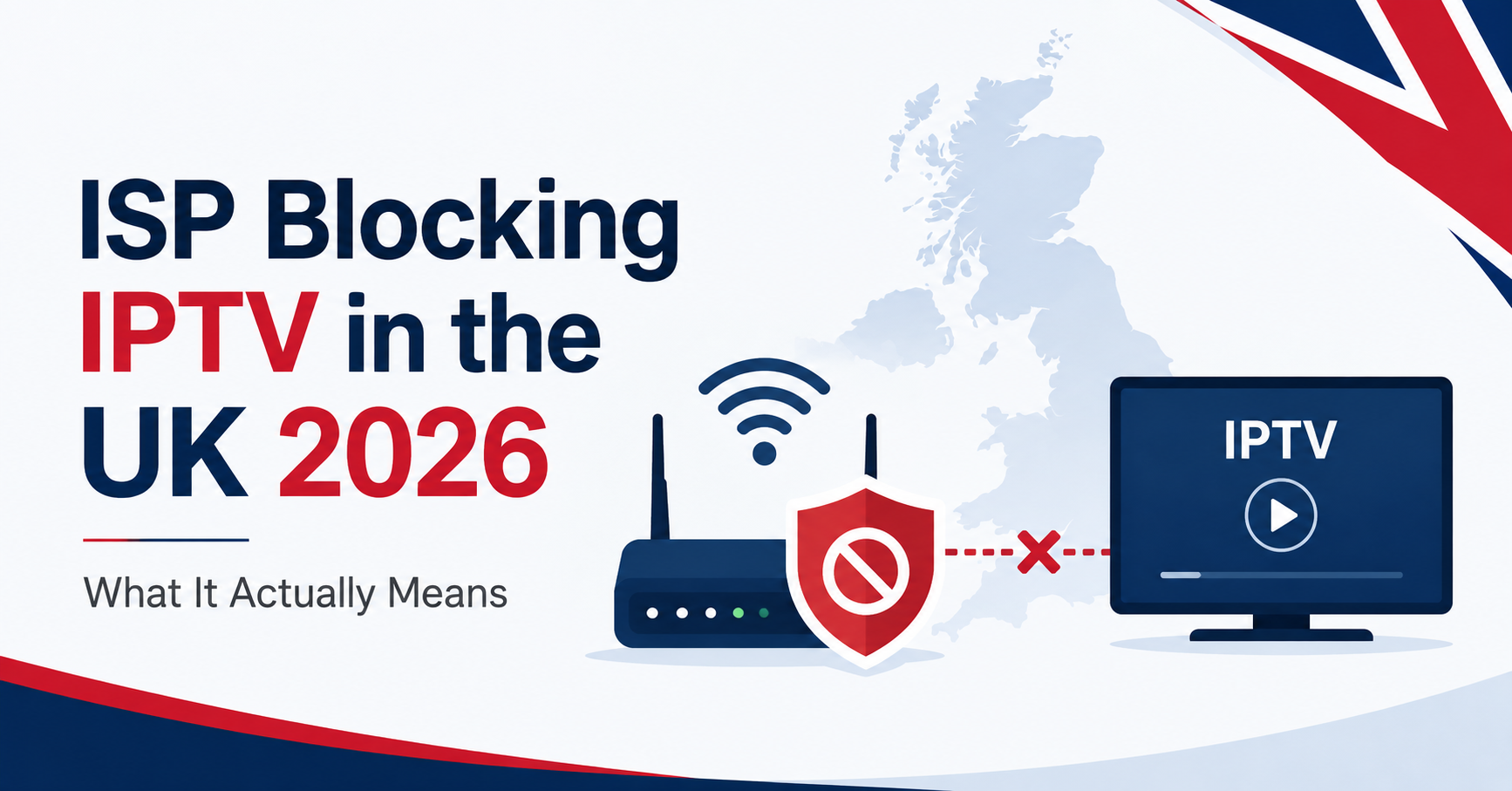

ISP Blocking IPTV in the UK almost always refers to a specific legal mechanism, not a general war on the technology. UK courts, most often the High Court under Section 97A of the Copyright, Designs and Patents Act 1988, order major ISPs such as to block domains and IP addresses tied to unlicensed streaming sources. IPTV itself is unaffected. Legitimate IPTV, including services from telcos and licensed UK IPTV reseller panels, is not the target and is not what these orders are written to stop.
[ez-toc]
What Is Actually Being Blocked
The phrase “ISP blocking IPTV” gets used loosely online, and that looseness causes a lot of confusion for both subscribers and people considering an IPTV reseller business. It helps to separate two things that get lumped together constantly.
IPTV, Internet Protocol Television, is simply a delivery method. Television carried over an internet connection rather than a satellite dish or an aerial. BBC iPlayer uses it. Autven Glass uses it. Any legitimately licensed streaming reseller platform uses it too. No court order in the UK targets that delivery method itself, because there would be nothing coherent to target. The technology is neutral.
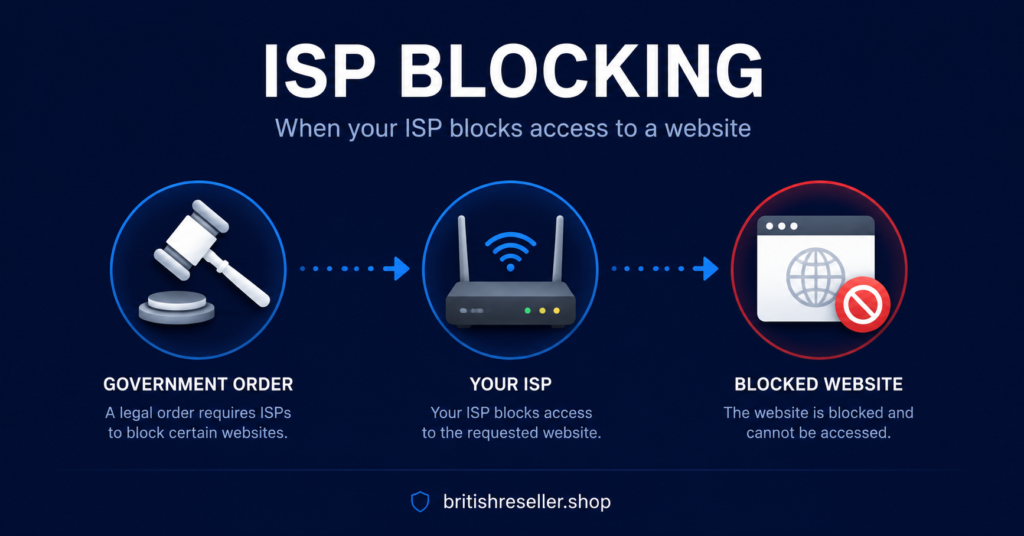
How the Blocking Actually Works Under UK Law
The legal basis is Section 97A of the CDPA 1988, which lets rights holders apply for injunctions against ISPs whose services are being used to infringe copyright, even though the ISP itself hasn’t done anything wrong. The ISP is simply the choke point the order runs through.
There are two broad flavours worth knowing about, because they behave differently in practice.
Static blocking targets a fixed list of domains and URLs. Once a domain is on the list, it stays blocked, though operators sometimes try to dodge this by switching to new domains, which is part of why newer “omnibus” orders exist to let rights holders add replacement domains without going back to court each time.
Dynamic blocking is built for live sport specifically. The League holds an order that lets it notify ISPs of new server IP addresses in near real time during match windows, and the block list is refreshed on a rolling basis through the season. This is the reason a stream that worked perfectly last Saturday can drop dead at kickoff the following week with no warning at all. It isn’t your connection and it usually isn’t a random server fault. It’s the order doing exactly what it was built to do.
Pro tip: If a stream consistently fails only during live sport windows and works fine the rest of the week, that pattern points strongly to a dynamic blocking order rather than a technical fault on either end.
ISP Blocking IPTV in the UK: Who Gets Named
Why This Matters More for Resellers Than Subscribers
A subscriber who occasionally hits a blocked stream experiences an inconvenience. Someone running an IPTV reseller business experiences something with actual commercial weight, because their customers are messaging them, not the rights holder, when a channel disappears.
This is where the legal question and the business question meet. Enforcement in the UK has consistently focused on operators, resellers, and distributors of unlicensed content rather than individual viewers. The Crown Prosecution Service requires a public interest test before pursuing copyright cases, and prosecuting a household for personal viewing rarely clears that bar. Selling access, on the other hand, is a different category of risk entirely, and it’s the category these blocking orders exist to disrupt.
If a UK IPTV reseller panel sources content that later shows up on a blocking list, three things tend to happen close together: the channels the reseller sold stop working, customers demand refunds or explanations, and the reseller has no real answer beyond “the provider changed something.” None of that is a technical problem you can fix with better wifi. It’s a sourcing problem.
Evaluating a Provider Without Guesswork
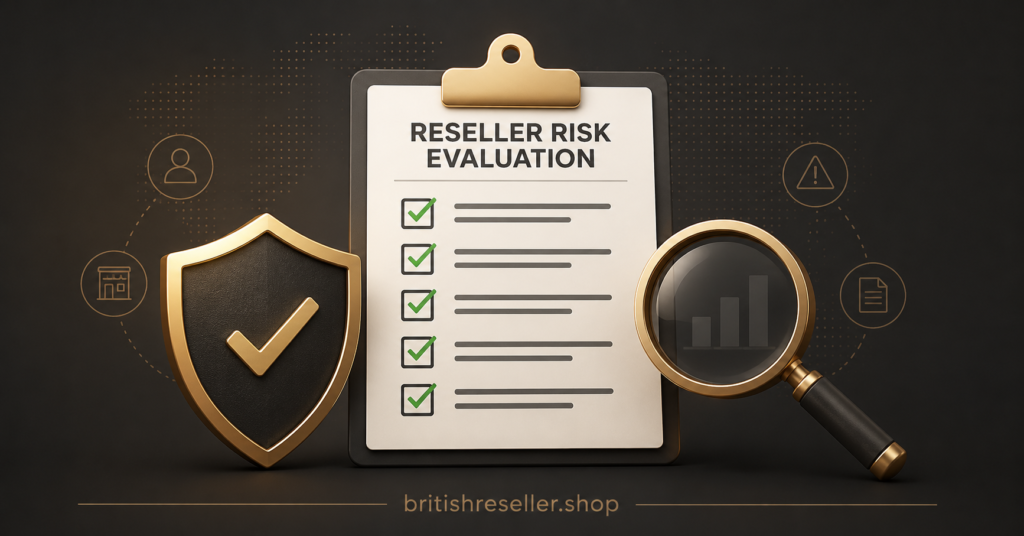
This is the part most guides skip, because it’s easier to talk about symptoms than causes. Before committing to a panel as an IPTV panel reseller, it’s worth asking direct questions rather than assuming a professional-looking website means anything about content rights.
| Question to Ask | Why It Matters |
|---|---|
| Where do you source content rights? | A vague or evasive answer is itself informative |
| What happens if channels stop working? | Reveals whether support is reactive or has a real plan |
| Do you provide business documentation? | Legitimate operators can usually produce something |
A well-built website, a working WhatsApp line, or a professional payment page proves nothing about whether the underlying content is licensed. None of those things are legal evidence, and treating them as such is a common and costly mistake. Illustrative providers in this space, including one sometimes referenced as Skip This, should be evaluated against exactly the same standard as any other option: what can they actually demonstrate about content rights, not how the site looks.
Pro tip: Ask a provider directly what happens to your credits and your customers if a supplier gets hit by a blocking order mid-month. A provider with a real answer has clearly thought about this before. One that hasn’t, hasn’t.
What Subscribers Should Actually Take From This
If you’re a subscriber rather than a reseller, the practical takeaway is simpler. A dropped channel during a big match is not automatically proof of anything sinister, but a pattern of drops tied specifically to live sport windows, paired with a provider who can’t explain their content sourcing, is worth paying attention to. Ask about refund terms, ask what device support looks like, and treat pricing that looks too good relative to everyone else as a question mark rather than a bargain.
Compare how a reseller panel is actually structured before assuming every provider works the same way behind the scenes, since panel quality and content sourcing are two separate things worth checking independently.
Building a Reseller Business That Isn’t Fragile
Anyone weighing up entry into a UK IPTV reseller market should treat blocking exposure as a genuine operational risk factor, alongside the more obvious ones like churn and support quality. A business built entirely around content that could disappear from a blocking list overnight is structurally fragile, no matter how good the margins look on paper this month.
See how credit systems and pricing actually work so the commercial side of the decision is grounded in real numbers rather than assumptions, and cross-check that against how transparent a provider is willing to be about sourcing.
Read a fuller buying guide for panels if you’re comparing more than one option, since panel controls, support responsiveness and documentation all matter as much as headline pricing.
Sub-resellers face a compounded version of this risk, because they’re dependent on a parent reseller’s sourcing decisions while still owning the direct customer relationship. Understand how sub-reseller accounts are structured before taking on that dependency, particularly around what happens to your customer base if the parent account’s supply changes.
Pro tip: Keep a simple written record of what any provider tells you about content sourcing and support commitments. If things go wrong later, having that in writing, even just a saved WhatsApp thread, is more useful than memory.
Pro tip: Diversifying isn’t a fix for a licensing problem, but understanding a provider’s business structure, including whether they operate as a registered company, is a reasonable part of due diligence before committing meaningful money.
Frequently Asked Questions
Is IPTV illegal in the UK because of these blocking orders?
No. IPTV as a technology isn’t illegal and isn’t the target of these orders. The orders target specific unauthorised streaming infrastructure. Whether a particular service is lawful depends entirely on whether the content it carries is properly licensed.
Why did my IPTV stream stop working during a football match?
The League holds a dynamic blocking order that lets it notify UK ISPs of new server IP addresses to block in near real time during live matches, with the list refreshed regularly through the season. A stream that worked last week can be blocked this week without warning.
Can I get in trouble just for watching a blocked IPTV service?
UK enforcement has consistently focused on operators, UK IPTV resellers and distributors of unlicensed content rather than individual viewers, and prosecuting a household for personal viewing rarely meets the CPS public interest test. This isn’t legal advice, and anyone with specific concerns should speak to a qualified solicitor.
Does a professional-looking IPTV website mean the content is legal?
No. A polished website, working support line or smooth payment process says nothing about whether the underlying content is licensed. That has to be evaluated separately, through direct questions about sourcing.
How can resellers reduce exposure to blocking-related disruption?
By asking providers direct questions about content sourcing and their plan if supply is disrupted, keeping records of those answers, and treating unusually low pricing as a signal to investigate rather than a straightforward win.