
Is IPTV Reselling Legal in the UK? The honest answer is that it depends entirely on what you’re reselling access to, not on the fact that you’re reselling IPTV itself. IPTV is just a delivery method, the same technology behind BBC iPlayer and Netflix, so there’s nothing inherently unlawful about running a UK IPTV reseller panel. What decides the legal question is whether the content flowing through that panel is properly licensed. Resell access to a service that holds genuine broadcasting rights and you’re operating a legitimate business. Resell access to unlicensed channels and films, and you’re distributing copyrighted material without permission, which UK law treats seriously.
[ez-toc]
What Does “IPTV Reselling” Actually Mean?
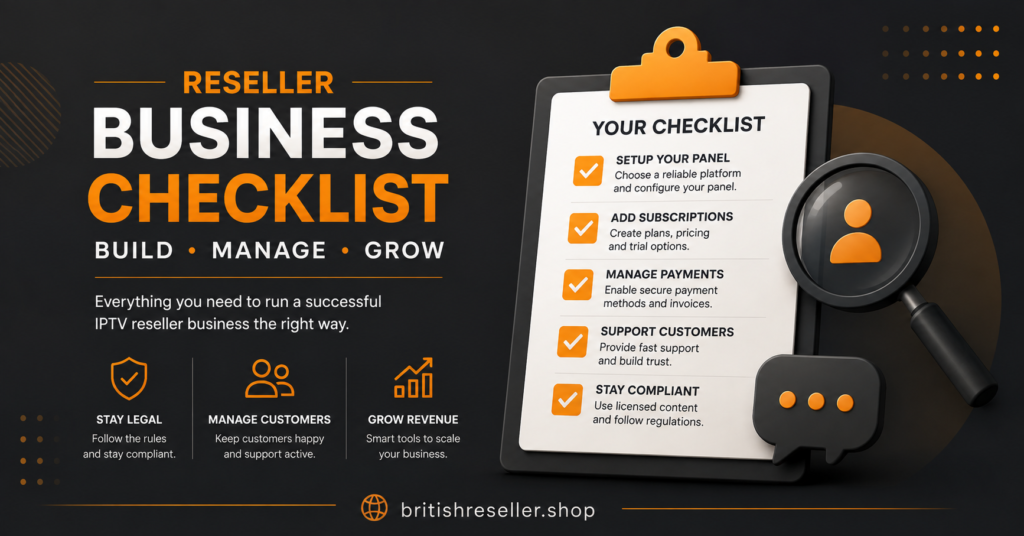
An IPTV reseller buys access, usually in the form of credits or a bulk allocation, from a provider, then sets up individual subscriptions for their own customers under their own pricing. You’re not hosting servers or encoding streams yourself. You’re running the customer-facing side of the business: onboarding, support, billing, and account management through a reseller dashboard.
That structure is common across plenty of industries. Web hosting resellers, mobile airtime resellers, and domain resellers all work the same way. None of that is unusual or suspicious on its own. What makes IPTV different, and what makes people search for Is IPTV Reselling Legal in the UK in the first place, is that a meaningful share of the IPTV market sells access to channels the seller has no rights to distribute.
Is IPTV Reselling Legal in the UK? The Core Legal Position
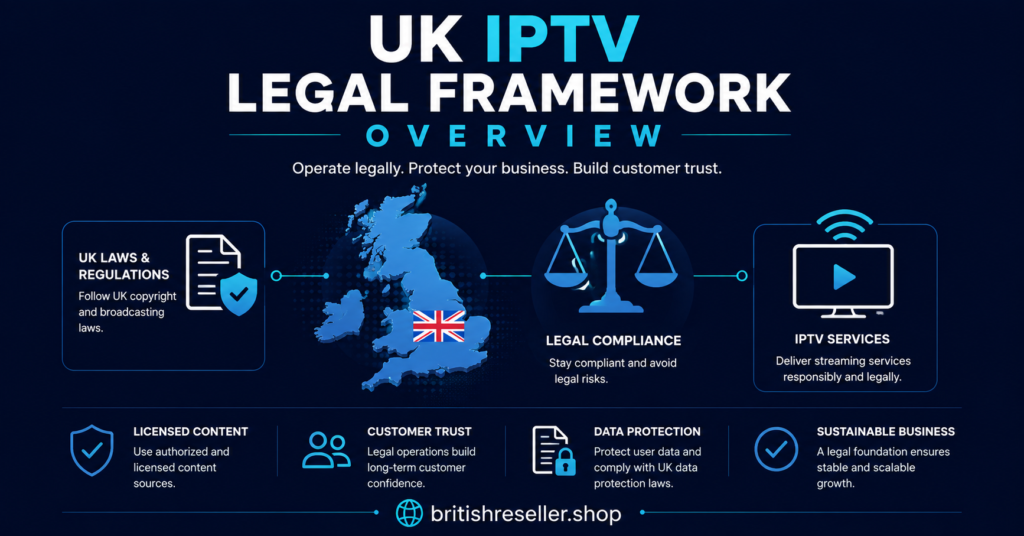
Here’s the part worth reading twice. UK copyright law, principally the Copyright, Designs and Patents Act 1988, makes it unlawful to distribute copyrighted broadcast content without the permission of the rights holder. The Digital Economy Act 2017 later raised the maximum penalty for serious, commercial-scale online copyright infringement, signalling that lawmakers see organised unlicensed streaming as a genuine criminal matter rather than a minor infraction.
Reselling is a form of distribution. If the underlying content is licensed, properly acquired, and the provider has the legal right to grant onward access, reselling it is a legitimate commercial activity. If the underlying content is unlicensed, the reseller is part of the distribution chain for infringing material, regardless of how professional the website looks or how the service is marketed. The technology, the app, the panel software, none of that changes the answer. The licensing status of the content is the entire question.
Pro tip: Before you agree to resell for any provider, ask directly where their content rights come from. A provider who can’t or won’t answer plainly is telling you something, even if they don’t say it out loud.
Who Actually Faces Enforcement Action?
Enforcement bodies including the Federation Against Copyright Theft (FACT) and the Police Intellectual Property Crime Unit (PIPCU) work with rights holders and police to investigate unlicensed streaming operations. Their focus, consistently, has been on the commercial side: people selling access, running panels, and profiting from distribution, rather than individual households watching television.
That doesn’t mean individual subscribers face zero exposure. Rights holders retain the ability to pursue civil action, and internet service providers have issued warning letters in some cases. But the pattern of enforcement action in the UK has overwhelmingly targeted sellers, operators, and resellers rather than end viewers, because that’s where the commercial harm to rights holders sits.
If you’re weighing up whether to become a reseller, this matters more to you than it does to a casual subscriber. You would be the person named on invoices, WhatsApp messages, and payment records. The legal exposure sits with whoever is doing the distributing, and in a reseller relationship, that’s you as much as it’s your upstream provider.
How to Evaluate an IPTV Provider Before You Resell for Them
Since the legality of your reselling business rests almost entirely on your upstream provider’s content rights, evaluating that provider properly is the single most important step before you sign up for any credits or panel.
| Good Sign | Warning Sign |
|---|---|
| Clear written answers about content sourcing when asked | Vague or evasive answers about where channels come from |
| Realistic channel counts and pricing in line with the market | Claims of every premium channel worldwide at unusually low prices |
| Transparent business terms, refund policy, and contact details | No verifiable business address or contact information |
| Willingness to discuss legal responsibility openly | Pressure to avoid discussing legality at all |
None of these signs are proof on their own. A professional-looking website, a working payment system, or slick marketing copy don’t confirm that content is licensed either, so don’t treat any single factor as a green light. Weigh them together, and take the conversation seriously if a provider dodges direct questions.
Pro tip: Ask your provider in writing whether they hold, or license from, the broadcasting rights for the content in their channel packages. A written answer, even a cautious one, is more useful than a verbal reassurance you can’t refer back to later.
What UK Resellers Should Understand About Their Own Exposure
If you’re already running, or thinking about running, a reseller business, a few practical points are worth taking seriously rather than hoping they don’t apply to you.
You are responsible for what you distribute. Using someone else’s panel software doesn’t transfer legal responsibility for the content that flows through it. The person creating customer lines and taking payment carries meaningful exposure if that content is unlicensed.
Panel providers are not automatically liable for content. Many IPTV reseller panels are, at a technical level, software and dashboard providers. They supply the tools; they don’t necessarily control what content a given upstream source is legally entitled to carry. That distinction matters when you’re trying to understand where responsibility genuinely sits.
Marketing language is not a legal shield. Calling a service “premium,” “unlimited,” or “fully licensed” in your own sales copy doesn’t make it true, and doesn’t protect you if it isn’t. Rights holders and enforcement bodies look at what’s actually being distributed, not the adjectives used to sell it.
A professional operation is not the same as a legal one. Invoicing systems, branded websites, and organised customer support all make a business look legitimate. None of them confirm licensing status, and none of them should be treated as proof that reselling a given service is lawful.
Subscriber Considerations Worth Knowing Too
Anyone reading about Is IPTV Reselling Legal in the UK as a prospective subscriber, rather than a reseller, should know a related fact: watching live television, including through an IPTV app, still requires a valid TV Licence in the UK, separately from whether the underlying content is properly licensed for distribution. That applies regardless of the device or delivery method.
Subscribers evaluating a service should look for the same transparency signals resellers should look for in a provider: clear business information, realistic pricing, honest answers about what’s included, and reasonable refund terms. A service that avoids these basics is giving you information, even if it never states anything outright.
Reseller Versus Sub-Reseller: Does the Risk Change?
If you’re operating as a sub-reseller under someone else’s panel, your legal position doesn’t automatically improve. You’re still the person setting up customer accounts and taking payment, even if a parent reseller controls pricing tiers or supplies your credits. Sub-resellers sometimes assume that distance from the original provider reduces exposure. It doesn’t remove it, because distribution responsibility follows whoever is actually creating and selling the access, not just whoever sits at the top of the supply chain.
If you’re operating as a full reseller yourself, you carry the added responsibility of choosing your upstream provider carefully in the first place, since everything downstream depends on that choice being sound.
For resellers researching how the operational side works day to day, including credit systems, dashboards, and customer account management, a working explanation of how IPTV reselling operates covers the mechanics separately from the legal question addressed here. If you’re weighing up a provider relationship and want to see how terms and refund conditions are typically documented, it’s worth reviewing a published policies and terms page as a reference point for what transparent documentation should look like.
Questions Worth Asking Before You Commit
| Question to Ask | Why It Matters |
|---|---|
| Where do your content rights come from? | Directly addresses the core legal question |
| What happens if a channel is taken down? | Reveals how the provider handles licensing disputes |
| Can I see your refund and terms policy in writing? | Shows whether the business operates transparently |
| How long have you operated, and can I verify it? | Established, visible businesses are easier to evaluate |
| What support do resellers get if a customer complains? | Indicates whether you’ll be left to handle problems alone |
Pro tip: Keep a written record of any answers a provider gives you about content licensing. If the situation changes later, having that record matters far more than relying on memory.
Practical Next Steps If You’re Considering Reselling
Whatever you decide, moving carefully beats moving quickly here. Do your own research into a provider before paying for credits. Ask direct questions and expect direct answers. Treat a strong sales pitch with the same scrutiny you’d give any other business claim, because it is one.
If you’re unsure whether a specific arrangement is lawful for your situation, a qualified solicitor is the only source that can give you advice tailored to your circumstances. General guidance, including this article, can explain the framework, but it can’t substitute for legal advice on your specific business plans. You can find general contact and business details for reference on this page if you want to see how one UK-based reseller panel presents its own transparency information.
Visible FAQ
Is IPTV Reselling Legal in the UK if the panel software itself is legitimate?
Legitimate panel software doesn’t determine legality on its own. What matters is whether the content being sold through that panel is properly licensed. The software is a tool; the content rights are the legal question.
Can I get in trouble as a reseller even if I never see the actual streams?
Yes, potentially. Distribution responsibility generally follows whoever is creating customer accounts and taking payment, not just whoever handles the technical streaming infrastructure.
Does calling my service “unofficial” or “unlicensed” in the small print protect me legally?
No. Disclaimers don’t change whether distributed content is licensed, and they don’t remove legal responsibility for what’s actually being sold.
Is there a difference in risk between reselling and sub-reselling?
Not fundamentally. Sub-resellers still create and sell customer access, so the core exposure around distributing content remains, even though a parent reseller may control pricing or credit supply.
Do subscribers face the same legal risk as resellers?
No, enforcement has consistently focused on sellers, operators, and resellers rather than individual viewers, though rights holders retain other legal options against subscribers in some circumstances.
How can I check if a provider’s content is actually licensed?
Ask directly and in writing, look for transparent business information, and treat vague or evasive answers as a warning sign. There’s no single public database that confirms every provider’s licensing status, so due diligence and direct questions are the practical approach.