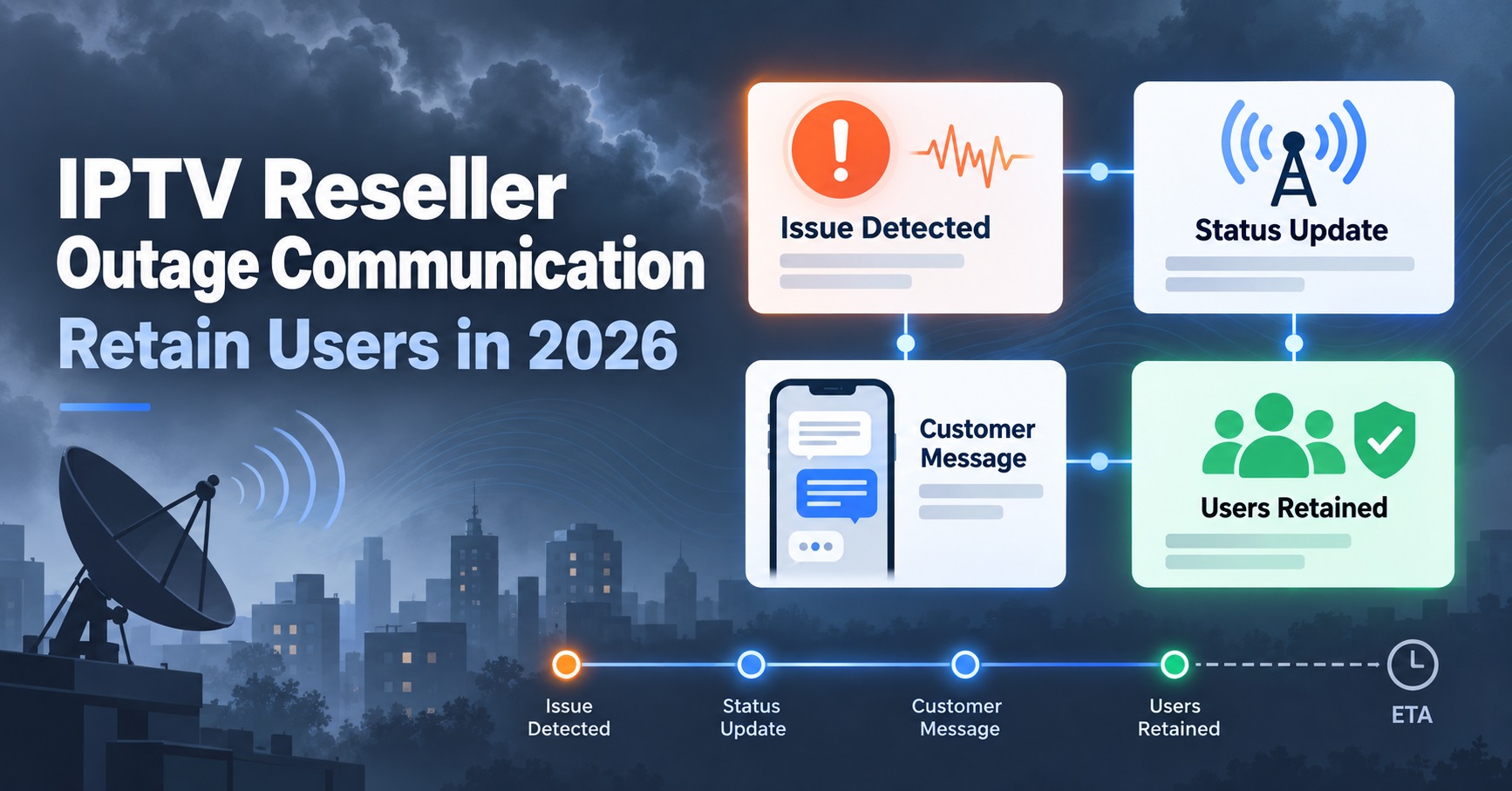

IPTV Reseller Outage Communication is the message you send to customers the moment their IPTV subscription stops working properly. Get it wrong and a temporary technical problem turns into a wave of refund requests and public complaints. Get it right and most customers will simply wait, because you told them what happened before they had to ask. This guide covers what to say, when to say it, which channel actually gets read, and what never to promise while a fault is still open.
What Counts as an Outage Worth Communicating
Not every buffering complaint needs a mass message. A single customer on a poor connection is a support ticket, not an outage. A genuine outage is when several unrelated customers report the same symptom within a short window: channels not loading, logins failing, or an entire bouquet freezing at once.
The trigger point matters because over-communicating trains customers to expect an update for every minor hiccup, while under-communicating leaves them guessing during a real fault. A reasonable rule is to treat anything affecting more than a handful of active customers, or lasting beyond fifteen to twenty minutes, as worth a proactive message rather than waiting for tickets to pile up.
Pro tip: Keep a simple log of when symptoms started, which categories or servers are affected, and how many customers reported it. That log becomes the first draft of your outage message.
Getting IPTV Reseller Outage Communication Right From the First Message
The first message sets the tone for everything after it. It should confirm the problem exists, name the general area affected without technical jargon, and give a realistic next update time. It should not include a firm fix time unless your supplier has actually confirmed one.
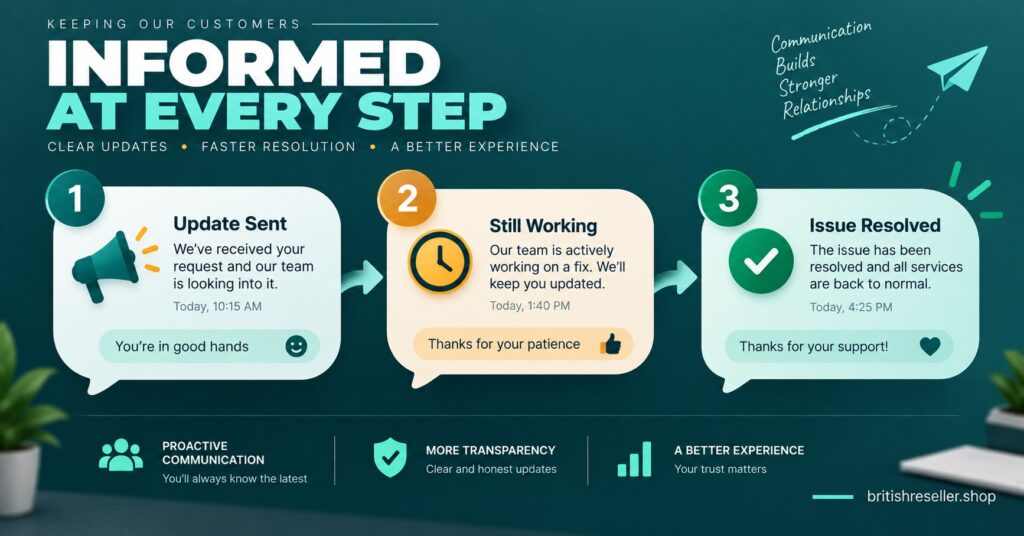
A workable structure looks like this: what is happening, what you already know, what you are doing right now, and when you will update again. Customers rarely need a full technical explanation. They need to know they have not been forgotten and that someone is actively looking at it.
Avoid silence in the gap between the first message and the fix. Even a short “still working on it, no new information yet” holds attention far better than nothing at all, because it stops customers assuming you have gone quiet on purpose.
Which Channel to Use and When
Different channels suit different stages of an outage. A short-lived fault might only need a single WhatsApp broadcast, while a multi-hour issue benefits from a pinned message somewhere customers can check without messaging you directly.
| Channel | Best for | Limitation |
|---|---|---|
| WhatsApp broadcast or group | Fast, personal updates during active faults | Easy to miss if muted; no permanent record for new customers |
| Website banner or status page | Ongoing outages lasting hours | Requires customers to think to check it |
| Longer outages, formal updates, post-incident summaries | Slower delivery and lower open rates during a live fault | |
| Social media post | Public reassurance, reducing repeat questions | Not private; avoid technical detail here |
Using two channels together, one for the fast update and one as a reference point customers can return to, usually reduces repeat questions more than relying on a single method.
What to Say, and What Never to Promise
Precise, honest language holds up better than reassuring language that turns out to be wrong. Saying “we expect this resolved within the hour” and missing that window damages trust more than saying “we do not yet have a fixed time” and then updating once you do.
Avoid promising a specific fix time unless it has come from a confirmed source. Avoid blaming the supplier by name in a public message, since customers do not need internal details to accept an explanation. Avoid offering compensation on the spot before you know the full scope, since a fifteen-minute blip and a six-hour outage warrant different responses.
Pro tip: Prepare two or three message templates in advance, one for a short glitch, one for a partial outage, and one for a full service disruption. Editing a template under pressure is far faster than writing from nothing while customers are already messaging you.
Where an outage is traced back to network-level interference rather than a fault on your side, it helps to understand the difference before you respond, since the explanation and the likely timeline are not the same. Understanding how blocking affects UK connections is a useful reference point when deciding how much detail to give customers.
A Realistic Timeline From Detection to Resolution
- Confirm the pattern. Check whether reports come from one server, one category, or the whole panel before sending anything.
- Send the first message within the first fifteen to twenty minutes of confirming a genuine outage, not the moment a single complaint arrives.
- Give a review point, such as “next update within the hour,” rather than a fix time you cannot control.
- Update again at the promised point, even if the only news is that there is no news yet.
- Send a clear resolution message once service is confirmed stable, not the moment it briefly comes back.
- Follow up individually with anyone who lost paid time, rather than issuing a blanket promise before you know who was actually affected.
Sub-Reseller Considerations
If you supply sub-resellers rather than end customers directly, outage communication has an extra layer. Sub-resellers need earlier and more technical detail than their own customers do, because they have to translate your update into something their customers will accept. A vague message to a sub-reseller often results in ten different, inconsistent explanations reaching end customers.

Giving sub-resellers a short internal summary, separate from the public-facing wording, keeps the message consistent down the chain. It also reduces the number of sub-resellers messaging you directly to ask what they should tell their own customers, since you have already answered that question in the same update. Reviewing how sub-reseller accounts and credit permissions are structured makes it easier to work out who needs which version of an update.
After the Outage: Rebuilding Trust
Once service is restored, the work is not quite finished. A short closing message confirming resolution, roughly what caused it in plain terms, and any goodwill gesture for affected customers closes the loop properly. Customers who received clear updates throughout an outage are noticeably less likely to raise a refund dispute afterward than those who found out service was back only by trying it themselves.
It is also worth reviewing what worked. If a particular channel went unread, or a template needed rewriting halfway through, note it while the outage is still fresh. Reviewing your panel setup against a wider panel comparison and evaluation guide can also highlight whether repeated outages point to a deeper supplier issue rather than a one-off fault.
Frequently Asked Questions
How quickly should a reseller send the first outage message?
Within fifteen to twenty minutes of confirming that several customers are affected, rather than waiting for a full explanation. A short holding message beats a delayed detailed one.
Should the message mention which supplier or server caused the fault?
Naming internal supplier details publicly rarely helps the customer and can create confusion if the situation changes. A general description of the affected area is usually enough.
What should be included in a resolution message?
Confirmation that service is stable, a brief plain-language reason if one is known, and how any customers who lost paid time should get in touch.
Is compensation expected for every outage?
Not for brief, minor disruptions. Longer or repeated outages are a different case, and your written refund and service policies should already set out how that is handled before an outage happens, not during one.
How should sub-resellers be updated differently from end customers?
Sub-resellers generally need earlier notice and more technical context, since they have to relay the situation to their own customers in their own words.
IPTV Reseller Panel Outage Communication comes down to speed, honesty, and consistency rather than clever wording. A short first message sent early, realistic language about timing, the right channel for the length of the fault, and a clear resolution message afterward will settle most customers far more effectively than silence followed by a single apologetic update once everything is already fixed. Set up your templates and channel choices before the next outage happens, not during it.