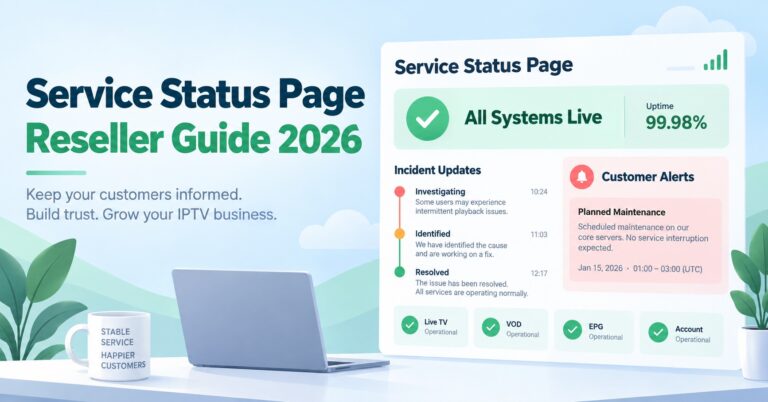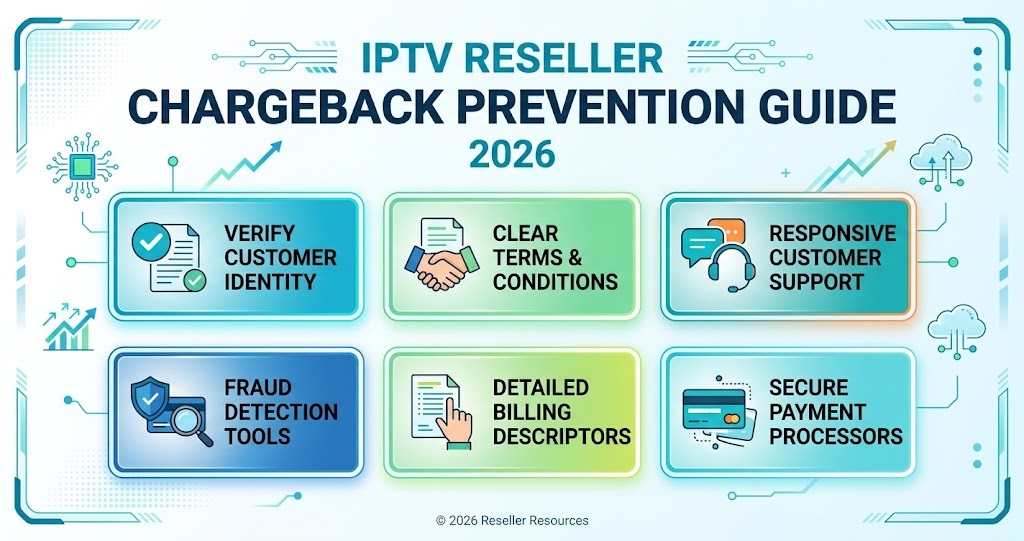

IPTV Reseller Chargeback Prevention is mostly decided before the customer ever pays, not after the bank letter arrives. A recognisable billing descriptor, terms the buyer actually agreed to on screen, proof that credentials were delivered and a support reply that lands faster than the card issuer’s call centre will stop far more disputes than any rebuttal document you write later.
The part most UK IPTV Panel resellers get wrong is what they are actually protecting. It is not the £12 or £15 sale. Once a dispute is filed it counts towards your ratio whether you win it or lose it, and in 2026 the ratios are tighter than they were a year ago. Lose the payment account and the credits sitting in your panel become very hard to turn into revenue.
Three Disputes, Three Different Fixes
Resellers tend to talk about chargebacks as one problem. Your acquirer does not, and neither do the card schemes. The reason code attached to a case decides what evidence is useful, so it helps to separate them early.
| Dispute type | What the customer usually claims | What actually prevents it |
|---|---|---|
| Unrecognised charge | “I don’t know this company” | Clear billing descriptor, order confirmation email, matching business name |
| Service not as described | “It never worked properly” | Honest sales copy, setup support, written fault process before the refund window closes |
| Subscription not stopped | “I cancelled and was charged again” | Working cancellation route, renewal reminder before billing, logged cancellation timestamps |
The first category is the expensive one. It is filed as fraud, it travels through a different remedy path, and it is the category most likely to be friendly fraud dressed up as a stranger using the card. The second and third categories are usually service failures that a faster support reply would have solved for the price of ten minutes.
Pro tip: Send the renewal reminder three to five days before you take a renewal payment, not on the day. A customer who is reminded while they still have service tends to cancel politely. A customer who sees the charge after the fact tends to phone the bank.
Why IPTV Reseller Chargeback Prevention Starts Before the Payment Link Is Sent
Almost every control that works is a pre-sale control.
Start with the descriptor, because it is the single cheapest fix available. If your trading name appears on a bank statement as an abbreviation the customer has never seen, you have manufactured a dispute for yourself. Use something the buyer will recognise, keep it consistent across every payment route you operate, and put the same name on your confirmation emails and receipts.
Next, the terms. Not a page buried in a footer, but a short, plain summary shown at the point of payment covering the subscription length, the renewal behaviour, the number of devices permitted, what happens if a category or stream becomes unavailable and how refunds are handled. Ticking a box is weak evidence on its own. A dated record showing which version of the terms the customer accepted, from which device, is considerably stronger. It is also the version of events you will need when an issuer asks your acquirer for a rebuttal.
Then the promise itself. Overselling is the most reliable dispute generator in this trade. If your sales message implies permanent availability, guaranteed uptime or content that may not remain in the catalogue, every future outage becomes a broken contract in the customer’s mind, and “not as described” is a dispute type that is genuinely hard to defend. The same discipline applies to the way you set retail prices, which is worth planning alongside your cost base in the pricing and credit calculation guide.
Finally, the boring one: make it easy to reach you. The bank is a support channel of last resort. If a customer can get a human reply within a few hours on a route they already know, most of them will use it. If your only contact route is a form that nobody answers at the weekend, you have effectively appointed the issuer as your customer service desk.
The 2026 Scheme Rules Changed the Maths
This is where a lot of older reseller advice is now out of date.
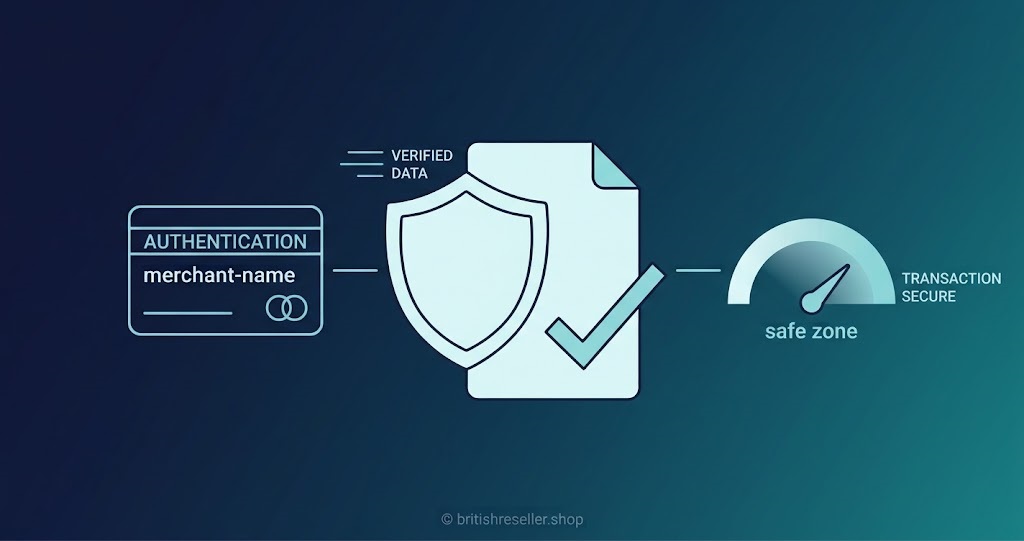
Visa replaced its previous dispute and fraud monitoring programmes with the Visa Acquirer Monitoring Programme, which combines fraud reports and disputes into a single ratio. The merchant threshold for the “Excessive” designation tightened to 1.5% on 1 April 2026, down from 2.2% when the programme launched, across most regions. There is no gentle early-warning tier below it, and crossing the line attracts a per-item enforcement fee applied through your acquirer.
Mastercard runs its own ratio-based programme, where a merchant can be flagged at roughly 100 chargebacks in a month combined with a chargeback ratio of 1.5% or above, with an escalating fine schedule rather than a single fee. Its ratio is calculated on a lag, this month’s chargebacks against last month’s sales, which means a quiet trading month can push your percentage up even when the number of disputes has not moved at all. That detail catches out seasonal sellers.
Mastercard also added a signal-driven layer in 2026 aimed at scam operations, enforceable from 24 July 2026, which requires an acquirer to investigate a flagged merchant within 72 hours and can end acceptance immediately rather than issuing fines. Industry guidance describes a combined refund and chargeback rate above 5% over a rolling 30-day window as one of the triggers, and generally frames it as most relevant to merchants with a short processing history. The wider point matters more than the exact figure: your refunds are now visible alongside your disputes, and a sudden change in behaviour can start a review on its own.
Two practical conclusions follow. Winning a representment does not remove the chargeback from the ratio that these programmes read, so fighting cases is a revenue exercise, not a compliance one. And thresholds are published by the schemes and applied through your acquirer, so the terms of your own merchant agreement may be stricter than the network minimum. Ask for them in writing rather than assuming.
Refunding Everything Is Not the Safe Option
The instinct when a customer complains is to refund immediately and move on. It is a reasonable instinct, and for a genuine service failure inside the first few days it is usually the right call. It stops the dispute, it costs you a credit, and it occasionally keeps a customer.
It stops working as a blanket policy for three reasons. Refunds are now counted alongside disputes in at least one monitoring signal, so a very high refund rate has its own consequences. A refund issued after the cardholder has already contacted their bank does not always cancel the chargeback, and you can end up paying twice unless you respond to the case properly. And a reputation for refunding on request travels quickly through the same groups and forums your customers found you in.
The middle path is a documented ladder. Diagnose first, fix if it is fixable, offer a credited extension where the fault was genuinely at your end, and refund when the fault cannot be resolved within a reasonable window. Write the ladder down, apply it consistently, and keep the timestamps. Consistency is what makes it defensible; improvisation is what makes it look arbitrary.
The First Few Hours of a Complaint
When a message arrives that sounds like a dispute in waiting, the sequence matters more than the wording.
Acknowledge it quickly, even if you cannot solve it yet. Silence is what pushes a frustrated buyer towards the bank. Confirm which account you are looking at, including the email or username on file, so the customer knows a real person has opened their record. Diagnose before you discuss money, because a surprising share of complaints are app configuration, an ISP issue or a device limit rather than a service fault. Then state the outcome and the timescale plainly, and log the entire exchange against the customer record.
If the customer tells you they have already contacted their bank, change approach. At that point you are assembling evidence for your acquirer, not negotiating. Offering a refund without checking the case status can leave you funding both sides of the same transaction.
Pro tip: Keep a short internal note field on every customer line recording the device type, the app used and the last verified working date. When a dispute lands nine weeks later, that note is often the only thing standing between you and a blank rebuttal form.
What to Record, and What Not to Hoard
Visa’s Compelling Evidence 3.0 framework, which applies to card-absent fraud disputes under reason code 10.4, gives a useful shape for record keeping even if you never use it directly. It asks for two prior undisputed transactions from the same card, dated between 120 and 365 days before the dispute, with at least two matching data elements across all three transactions, one of which must be the IP address or the device identifier. Meeting the criteria shifts liability back to the issuer rather than leaving the outcome to an issuer’s judgement.
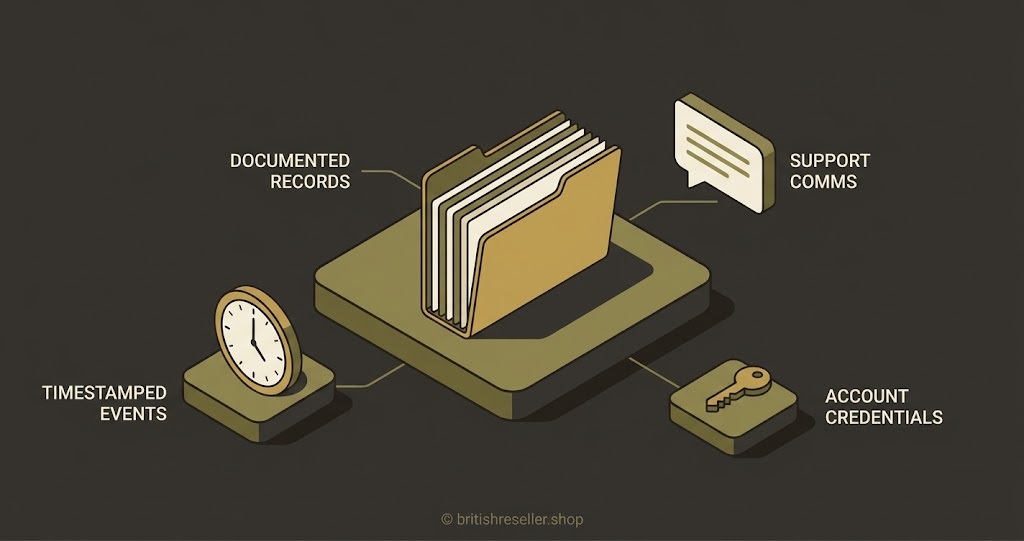
The obvious limitation is that it does nothing for a first-time buyer, which is where a large share of reseller disputes actually occur. Its real value for a small operation is as a checklist of what to capture from the start: the IP address at purchase, a device or session identifier, the account login used, the email address, the timestamps for credential delivery and first successful connection, and the terms version accepted.
Capture that with some discipline. You are handling customer data, so keep a lawful basis for holding it, retain it only for as long as dispute windows realistically run, restrict who can see it and never store card numbers yourself. Your processor already holds the payment data, and it is not yours to duplicate.
Where Sub-Resellers Multiply the Exposure
A sub-reseller does not usually create disputes on your merchant account, because their customers pay them. What they create is a chain of refund pressure that lands on you afterwards.
The pattern is predictable. A sub-reseller’s customer disputes with their own payment provider, the sub-reseller absorbs the loss, and then asks you to return the credit. If your written terms never covered that scenario, you are negotiating under pressure with someone who may also be your largest volume account. Decide the policy before you sell the package: whether credits are refundable at all, whether an unused portion can be reallocated, and what evidence you require.
Equally, if a sub-reseller runs aggressive marketing, guarantees things nobody can guarantee, or sells into markets you have not checked, the complaints eventually surface as your service quality problem. Permission controls and credit limits exist for exactly this, and are worth configuring properly when you set up sub-reseller accounts and credit allocations. Publishing your own terms clearly, as set out in the site policies, gives you something to point at when the conversation turns awkward.
A Word on Payment Routes
Some IPTV resellers respond to dispute pressure by moving customers towards payment methods that cannot easily be reversed. It reduces chargebacks by definition, and it is worth understanding what it actually trades away.
Card payments convert better for ordinary consumers, and a buyer who is asked to pay by irreversible transfer for a service they have not tested will often simply leave. Abrupt shifts away from card acceptance are also exactly the kind of pattern acquirers and monitoring providers look at. And the absence of a chargeback route does not remove your obligations under consumer law in the markets you sell into.
A mixed approach tends to be more durable: keep a mainstream route for new customers where you can, use alternatives for repeat buyers who prefer them, and be honest that no payment method is evidence of anything about the service behind it. How those processing costs and losses feed into your actual take-home figure is covered in more detail in the guide to realistic reseller margins and costs.
Pro tip: Reconcile disputes monthly against your own sales count rather than waiting for your acquirer to tell you. By the time a formal notice arrives, the ratio has usually already been sitting above the line for weeks.
Questions Resellers Actually Ask
Does winning a chargeback remove it from my ratio?
No. The monitoring programmes count the dispute at the point it was filed. Representment can recover the money, which is worth doing, but it does not repair the percentage that decides whether your account stays open.
Is a clearly worded no-refund policy enough to block a chargeback?
It is not a block. A cardholder can raise a dispute regardless of what your terms say. A clear policy that the customer demonstrably accepted is useful evidence in a rebuttal, and it carries much more weight when your conduct has matched it consistently.
How long should I keep purchase and connection records?
Long enough to cover realistic dispute windows, which can stretch well beyond the typical 120 days depending on the reason code and the circumstances. Twelve to eighteen months is a sensible working figure for transaction and connection logs, balanced against keeping no more personal data than you need.
Can I claim back credits from my supplier when a customer charges back?
Usually not, unless your written agreement says so. The customer’s dispute is with you, and the supplier has already delivered the account capacity. This is why credit refund and reallocation terms are worth settling in writing before you buy a large package.
What billing descriptor should I use?
The name the customer will recognise from your website and confirmation email, with a contact route attached where your processor allows it. Consistency across every payment channel matters more than the specific wording.
Where This Leaves You
IPTV Reseller Panel Chargeback Prevention comes down to boring operational habits rather than clever rebuttal writing: a descriptor people recognise, promises you can actually keep, a support route that answers before the bank does, records captured at the point of sale, and a refund ladder you apply the same way every time. The 2026 thresholds punish volume, and they count disputes you win alongside disputes you lose, so the work has to happen upstream.
There are limits to what any reseller can control. You cannot stop a determined first-party fraud attempt, you cannot fix an issuer that rejects a well-built rebuttal, and you will occasionally lose a case you should have won. What you can control is whether the pattern stays small enough to be unremarkable. Start this week by checking what your descriptor actually looks like on a statement, and by reconciling last month’s disputes against last month’s sales so you know the number before somebody else tells you it.