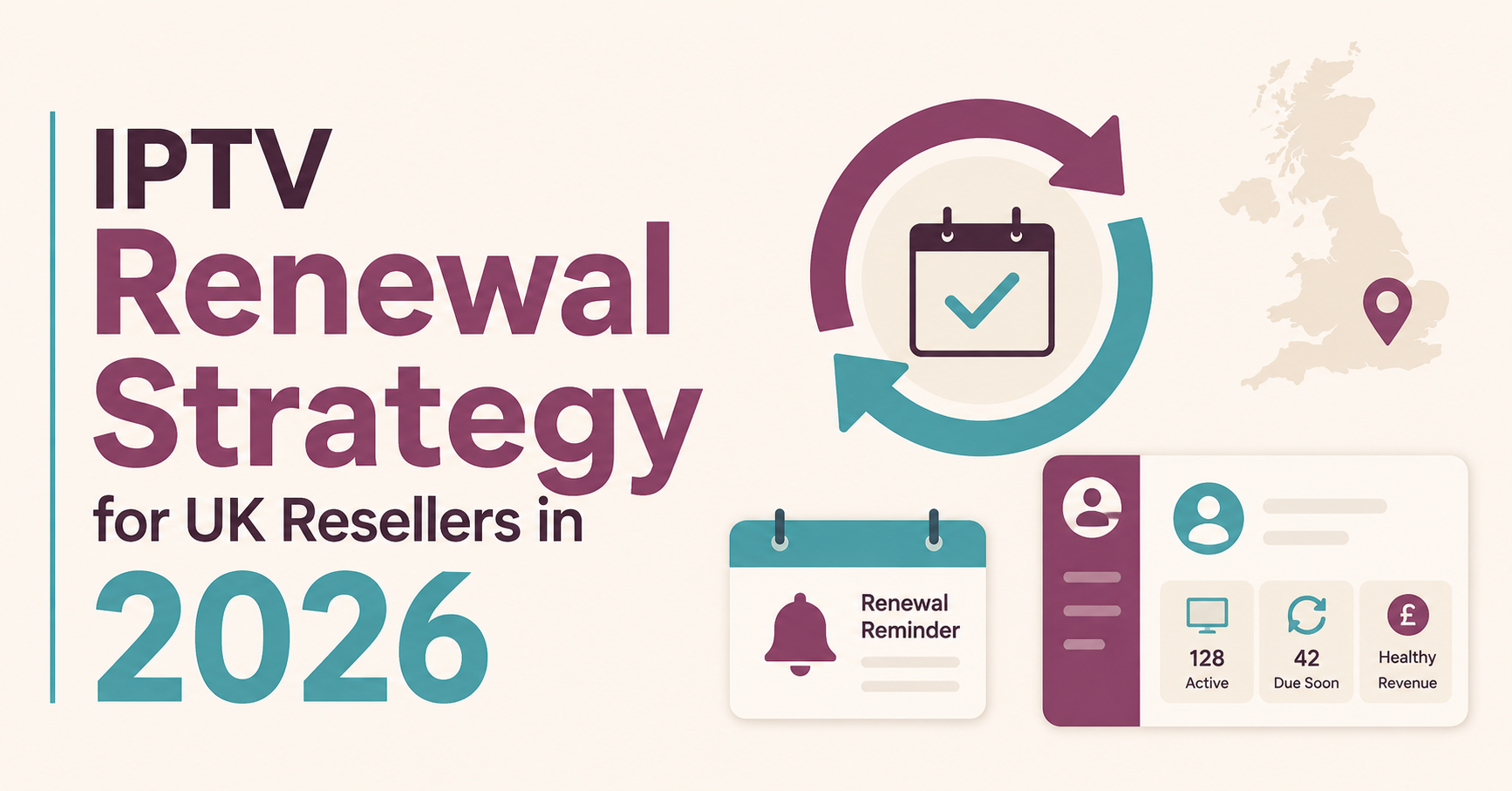

A working IPTV Renewal Strategy for UK Resellers rests on three things: timing reminders correctly, keeping enough credits in stock, and giving customers an easy way to pay before their line expires. Miss any one of these and a customer who was happily watching last week quietly disappears the moment their subscription lapses, often without complaint and without warning. Most resellers do not lose customers because the service failed. They lose them because nobody reminded the customer in time, or the renewal process asked for too much effort at the wrong moment.
Why Renewal Timing Decides Whether You Keep a Customer
The gap between “still watching” and “gone for good” is usually just a few days. Once a line expires, the customer’s app stops working, and their first instinct is rarely to check their email for a renewal notice. It is to search for an alternative or ask a friend what they use instead. Every day a lapsed account sits idle increases the chance you never hear from that customer again.
This is why renewal timing matters more than almost any other part of running a IPTV Panel reseller business. A customer reminded five days before expiry, with a clear price and a simple payment method, renews at a far higher rate than one who finds out their subscription has already ended. The difference is not the service quality. It is whether the reminder arrived while the customer still had a reason to act.
Building an IPTV Renewal Strategy for UK Resellers Around a Reminder Calendar
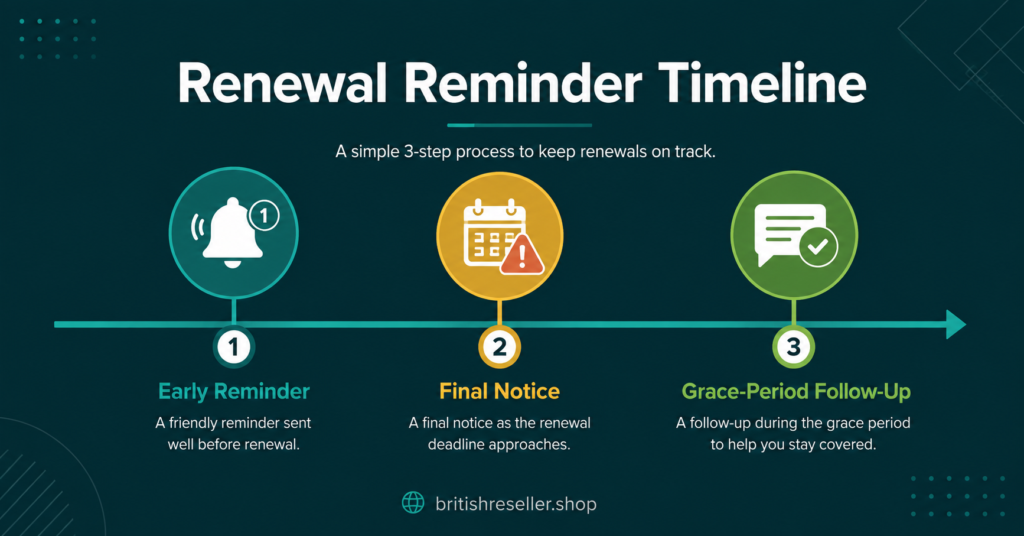
An effective IPTV Renewal Strategy for UK Resellers starts with a fixed reminder schedule rather than reacting to expiries as they happen. Most experienced resellers settle on a three-touch pattern: an early notice, a final warning, and a short grace-period message after expiry.
A common structure looks like this: send the first reminder around five to seven days before the line expires, giving the customer time to notice and budget for the renewal. Send a second, shorter reminder one to two days before expiry, worded as a final notice rather than a repeat of the first message. Then, if the line still lapses, send one grace-period message within 24 to 48 hours of expiry, before the customer has fully moved on.
Pro tip: Keep the pre-expiry message short and specific. State the exact expiry date, the renewal price, and how to pay, rather than a generic “your subscription is ending soon.”
Trying to remember every customer’s expiry date manually does not scale past a handful of accounts. Most panels display upcoming expiries in the dashboard, and building your renewal reminders around a proper credit and pricing calculation makes it far easier to know which customers are due, and what to charge them, without guesswork each month.
Matching Reminder Channels to How UK Customers Actually Respond
Not every customer checks the same channel. Email reminders are easy to automate but get buried or land in spam, particularly with free email providers. WhatsApp and SMS tend to get read within minutes, which matters when the message is time-sensitive, but they need a real phone number and some manual effort unless you are using a bulk-messaging tool connected to your customer list.
A blended approach usually performs best: use whichever channel the customer originally contacted you through as the primary reminder route, and treat email as a backup rather than the main method. Customers who signed up through WhatsApp are unlikely to be checking their inbox for a renewal notice.
Keep the tone practical rather than pushy. A reminder that reads like an ultimatum tends to get ignored, while one that simply states the facts, expiry date, price, payment link, gets acted on.
Keeping Credit Stock Ahead of Renewal Demand
Nothing undermines a renewal strategy faster than running out of credits at the exact moment a batch of customers is due to renew. If a customer pays and then has to wait a day or two for their line to actually be extended, the goodwill from a smooth renewal reminder evaporates quickly.
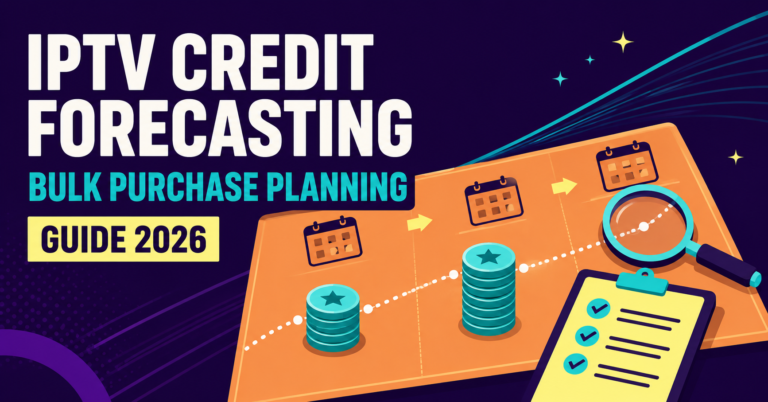
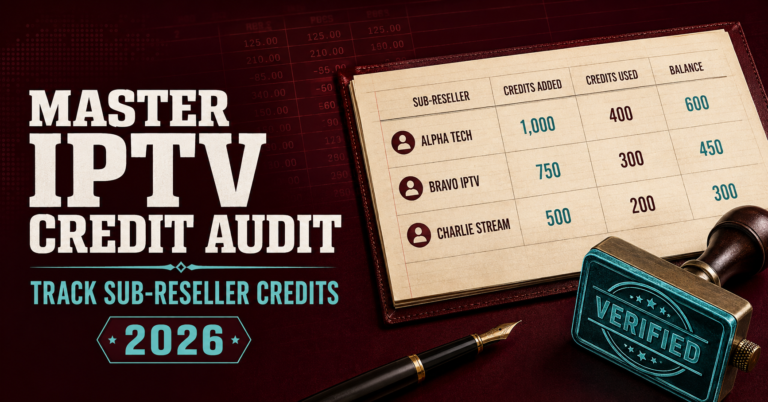
Forecasting renewal demand is not complicated once you have a few months of history. Look at how many customers are due each week and buy credits ahead of that curve, rather than topping up reactively after a shortfall. Resellers running larger customer bases sometimes delegate renewal processing to a sub-reseller, which brings its own credit-tracking requirements worth setting up properly through sub-reseller account and credit controls rather than an informal arrangement.
| Renewal window | Recommended action | Risk if missed |
|---|---|---|
| 5 to 7 days before expiry | Send the first reminder with exact date and price | Customer has no advance notice to plan payment |
| 1 to 2 days before expiry | Send a short final notice message | Line lapses with no warning of imminent expiry |
| 24 to 48 hours after expiry | Send a grace period win back message | Customer has already searched for an alternative |
Handling Lapsed Accounts Without Losing the Customer for Good
A lapsed account is not automatically a lost customer, but the window to bring them back is narrow. Once a line has been down for several days, most customers have already found a replacement, whether that is another reseller, a different service, or simply going without.
The most effective win-back approach treats the first 48 hours after expiry as a distinct stage, separate from the pre-expiry reminders. A short, direct message acknowledging the expiry and offering to reactivate the line as soon as payment is received tends to recover more customers than silence followed by a generic “we miss you” message weeks later. After that early window closes, recovery rates drop sharply, and it becomes more efficient to treat the contact as a fresh acquisition than a renewal.
Pro tip: Avoid discounting a lapsed line automatically. Reactivating at the normal price, quickly and with minimal friction, usually beats offering a discount that trains customers to let their subscription lapse on purpose.
Common Renewal Mistakes That Quietly Cost UK Resellers Money
A handful of habits show up repeatedly among resellers who lose more renewals than they should. Sending only one reminder, and sending it too close to the expiry date, leaves no room for a customer who simply missed the message. Using vague wording such as “your account may expire soon” instead of a specific date creates uncertainty rather than urgency.
Another common mistake is making payment harder than it needs to be, asking a customer to message you, wait for a reply, and then work out how to pay, rather than including a direct payment link in the reminder itself. IPTV Panel Resellers who treat renewal messaging as an afterthought, sent whenever there is time, rather than a scheduled part of the business, consistently see lower renewal rates than those who build it into a routine.
Sub-Reseller Renewal Coordination
Where sub-resellers manage part of the customer base, renewal responsibility needs to be explicit rather than assumed. Decide in advance whether the sub-reseller sends their own reminders or whether reminders are centralised, and make sure credit balances are checked before a renewal push rather than during one. A sub-reseller who runs out of credits mid-campaign creates the exact delay that undoes the benefit of a well-timed reminder.
Clear documentation matters here. If a sub-reseller is responsible for their own customer communications, they should know the standard reminder timings above so the experience stays consistent across your whole customer base, not just the accounts you manage directly.
Building Renewal Habits Into Everyday Operations
None of this requires expensive tools. A simple spreadsheet tracking each customer’s expiry date, last renewal amount, and preferred contact channel is enough for smaller operations. As the customer base grows, many resellers move to a scheduling tool or a panel feature that flags upcoming expiries automatically, freeing up time that would otherwise go into manually checking dates.
The habit that separates resellers with strong renewal rates from those without one is consistency. Reminders sent on a fixed schedule, using the same wording structure each time, build a predictable rhythm that customers come to expect, much like a phone contract or a streaming subscription renewal notice. Building customer relationships that support this kind of predictable renewal behaviour starts earlier than the reminder itself, and it connects closely to how you acquire and onboard customers in the first place.

Renewal performance also feeds directly into profitability. A customer who renews for a year is worth considerably more than one who lapses after a single month, and understanding that difference helps justify the time spent on reminders. If you want to see how renewal rates translate into actual margin, the earnings and margin guide walks through the underlying arithmetic without promising guaranteed income.
Frequently Asked Questions
How many days before expiry should I send the first renewal reminder?
Five to seven days gives most customers enough notice to plan the payment without the message being sent so early that it gets forgotten.
Should I offer a discount to win back a lapsed customer?
Not automatically. A quick, low-friction reactivation at the normal price tends to work better than a discount, which can encourage customers to let their line lapse deliberately.
What is the best way to remind customers who do not check email?
Use the channel the customer originally contacted you through, often WhatsApp or SMS for UK IPTV customers, and treat email as a backup rather than the primary method.
How long after expiry is it still worth trying to win a customer back?
The first 24 to 48 hours after expiry give the best recovery rate. After that, most customers have already found an alternative.
Do sub-resellers need their own renewal process?
They can, but credit balances and reminder timing should be agreed in advance so customers get a consistent experience regardless of which part of the business manages their line.
Reseller Renewal Checklist
- Set a fixed reminder schedule of five to seven days before expiry, one to two days before expiry, and a grace-period message after
- Include the exact expiry date and price in every reminder rather than vague wording
- Match the reminder channel to how each customer originally made contact
- Forecast credit stock against upcoming renewals rather than topping up reactively
- Treat the first 48 hours after expiry as a distinct win-back window
- Confirm sub-reseller credit balances before any scheduled renewal push
- Track expiry dates and renewal history somewhere consistent, even if it starts as a simple spreadsheet
A dependable IPTV Renewal Strategy for UK IPTV Panel Resellers is less about clever tactics and more about consistency: sending the right reminder at the right time, keeping enough credit stock in reserve, and making it genuinely easy for a customer to pay before their line goes dark. Resellers who treat renewals as a scheduled part of running the business, rather than something handled after the fact, keep noticeably more of their customer base month over month. Start with the reminder timings above, track them for a few renewal cycles, and adjust the wording and channels based on what your own customers actually respond to.